
Mamdani at Bowdoin: A leader who is not afraid to step up and say, ‘Heck no’
By Arienne Pastor
Earlier this month, Zohran Mamdani was sworn in as New York City’s 112th mayor.
Mamdani won the election by nearly 10 percent (over 200,000 votes) after running a campaign based around lowering costs and ensuring that New Yorkers are able to live in a more affordable city. These internationalist and self-professed socialist ideals have a long history—one that begins with his childhood in Kampala, Uganda and continued to his education at Bowdoin College in Brunswick, Maine.
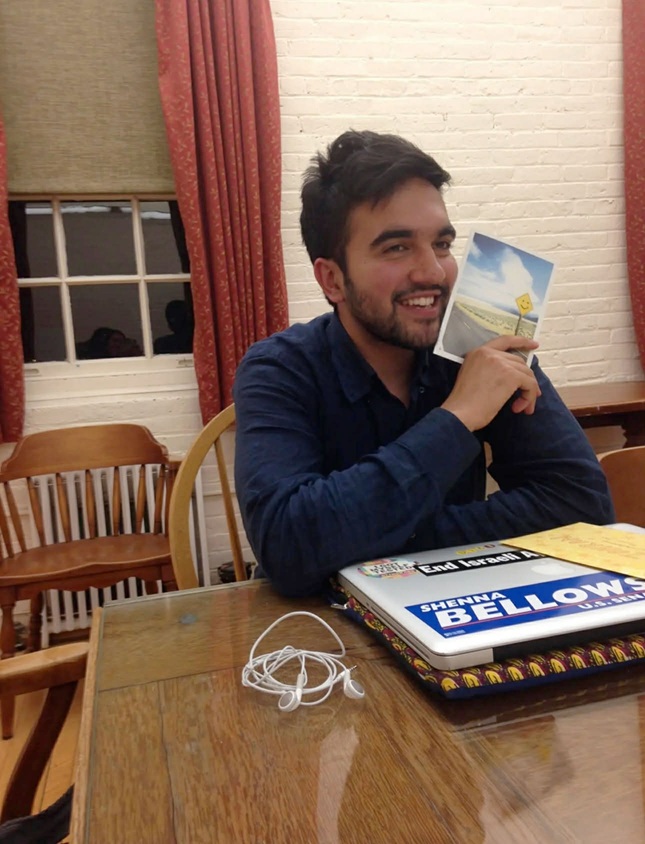
Mamdani was an active member of Bowdoin’s campus. He worked on the school newspaper, The Orient, later contributed op-eds to the paper, founded the school’s Students for Justice in Palestine chapter, and was an academic force on campus.
At Bowdoin, students in their senior year are able to work on an Honors, a year-long thesis in a certain subject, with a committee of professors working as advisors, editors, and confidants. Mamdani’s senior Honors project surrounded French philosopher Frantz Fanon and the applications of his decolonial theory in African history. Olufemi Vaughan, professor of Black Studies at Amherst College and a former professor of Africana Studies & History at Bowdoin College, was a part of Mamdani’s Honors committee.
“The specifics of the thesis itself, I cannot clearly remember, aside from the fact that I thought it was very well done, really insightful,” Vaughan said when interviewed by The FilAm. “That much I remember, and quite frankly, I think [it was] really innovative, but very much in line with the ways in which he does his work anyway—quite original work.”
Vaughan recalled that Mamdani, from his beginning at Bowdoin as a student of Africana Studies, seemed to already know much of his path.

“In much of what he did… there’s always this very clear sense of direction and purpose. Very much like, ‘This is what I want to do.’ And he would also go in and say, ‘This is how I think I want to do it, and how can you help me achieve my objectives?’ Which is, as I said, a bit unique. That element of clarity is very consistent [in his work],” Vaughan said.
Mamdani’s academic work was notable to both classmates and professors. Abdullah Hashimi, who wrote a profile of Mamdani’s time at Bowdoin, found that many of Mamdani’s more activist leanings entangled themselves with the academics he took.
“Based on my conversations with his classmates and professors he went to school with, I’d say [he had a] profound impact on them. They talked about him not only as just a friend and a scholar, but just as a person.… There’s a reason like the title is ‘activist and academic,’ right? Because he was both of these things while he was at the school,” Hashimi said.
Vaughan also found that Mamdani’s activism was very present and consistent with his academic work. Mamdani’s strong ideals and sense of selfhood surrounding those ideals, Vaughan noted, were shown in his schoolwork, and later, his political work.
“What was unique, though, about Zohran, which struck me then, is that he had this kind of cosmopolitan, internationalist, expansive worldview that most students and scholars of Africana or Black Studies tend not to have,” Vaughan said.
Zahir Janmohamed, an assistant professor of English at Bowdoin College, interviewed Mamdani for Bon Appétit last March. Janmohamed noted that Mamdani’s cosmopolitan worldview and sincere, strongly held convictions both very much align with his political campaign.
“I find that many students and faculty are enthusiastic about Mamdani because 1) his win was a long shot and yet he still pulled it off; 2) he is addressing the issue of affordability which affects all of us; 3) he is a political and yet somehow, he comes across as genuine and sincere,” Janmohamed wrote in an email to The FilAm.
Hashimi, too, noted that the strong, clear convictions Mamdani holds has garnered him support throughout Bowdoin students, alumni, and faculty.
“(His activist work) was apparent to his professors and apparent to his friends,” Hashimi said. “And now, it’s apparent to all the alumni students and faculty who see that a person who’s from this school (goes out and becomes) the mayor of New York City. I personally saw an immense amount of pride and support coming from people when I was writing.”
Though they have not communicated since Mamdani’s graduation from Bowdoin, Vaughan ultimately wishes him well. He also finds much inspiration in Mamdani as part of a generation of future leaders with clear ideals rooted in supporting others.
“I do believe that we need this generation to step up.…This is really the time for good people to stand up and to say, ‘Heck no,’” Vaughan said. “He is a leader, I hope, in that trend…. (This is) a time not to be afraid, a time to be very clear about who we are, what shared values we have. Zohran has demonstrated for me that he is really that kind of a person. I’m really humbled that he was my student.”
Arienne “Rin” Pastor is an undergraduate at Bowdoin College double majoring in Government & Legal Studies and English. She is an associate editor of the school newspaper, The Bowdoin Orient, and a senior editor of Bowdoin’s literary magazine, The Quill. She hopes to do legal work at civil rights nonprofits in the future.
