
Journalist Ricky Rillera: ‘Ethnic media should have a spot in the White House press pool’
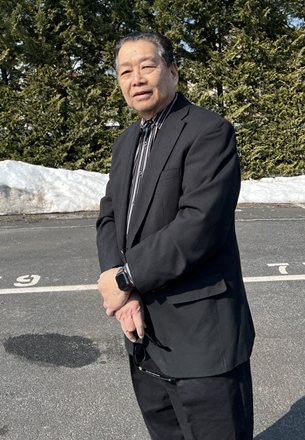
By Cristina DC Pastor
Ricky Rillera’s path to journalism began in fifth grade. He and a seatmate in school would watch beloved TV shows such as “Dick Tracy,” “The Jetsons,” “The Man from U.N.C.L.E.” and retell those stories to their classmates.
In sophomore high school, he became the literary and feature editor; by senior year, he was editor‑in‑chief. In college, he stepped into more demanding roles: first as news editor, then managing editor, and eventually editor for two terms.
Even as a student, he joined a mainstream Philippine media as a cub reporter assigned to the education beat. He was covering students and schools during a period of intense activism.
This passion for news reporting did not waver even when he immigrated to the United States. He became a reporter quietly, almost sideways, through the small openings that community life offered. His earliest assignments were freelance entertainment pieces — cultural events, community celebrations, and sports.
“I wrote wherever I could, for whoever would take my stories,” he mused.
Over time, he moved into a hybrid role as a marketing and community reporter. That shift changed everything. Suddenly, he wasn’t just writing stories — he was learning how a publication survives. He saw how advertising kept the lights on, how relationships with small businesses mattered, how community trust was earned one issue at a time. He learned that journalism, especially in ethnic media, is never just about the byline. It is about sustaining the platform that allows the story to exist at all.
“But as I moved from one outlet to another, I began to notice the gaps. There were stories no one was telling — stories about workers, immigrants, families navigating two worlds, communities overlooked by mainstream newsrooms. I saw how fragile our media ecosystem was, how easily important narratives could disappear simply because no one had the time, staff, or resources to pursue them.”
That realization became a turning point.
“I understood that if I wanted to see the kind of journalism our community deserved, I couldn’t wait for someone else to build it. So, I took the leap. With limited resources, no corporate backing, and more determination than certainty, I founded my own publication. It wasn’t easy. It still isn’t. But it is necessary.
“Every step of my journey — from freelancing, reporting, marketing, hustling between roles — prepared me for this responsibility. I learned that ethnic media survives not because it is well funded, but because it is deeply needed. And sometimes, when the stories matter enough, you build the platform yourself.”
Today, Rillera is possibly the longest-serving journalist covering the Filipino American community in the New York metropolitan area. He wrote a column for the Filipino Express in the 1980s and is now the editor in chief of the Philippine Daily Mirror news site.
After nearly three decades as a procurement officer at the United Nations, he opened a private practice in business management consultancy while continuing his editorial leadership. He became president of the Filipino American Press Club in New York in 2017 to 2018. Through it all, he has remained the ‘eyes and ears’ of his community — attending gatherings, listening closely, interviewing personalities and crafting reflective pieces.
For Rillera, reporting never grows old. It evolves, adapts, and persists much like the community he serves.
The FilAm: What is the state of community/ethnic media today?
RR: Community and ethnic media today are both indispensable and endangered. It remains the primary source of trusted information for millions of immigrants and diaspora communities, yet it operates with shrinking budgets, skeletal staff, and increasing pressure to do more with less. These outlets continue to fill the gaps left by mainstream newsrooms — telling stories of migration, identity, labor, discrimination, and local civic life that would otherwise go uncovered.
Despite these constraints, I think ethnic media remains one of the most resilient sectors in journalism, sustained by mission‑driven reporters who see their work not just as news, but as cultural stewardship and civic service.
TF: What is the state of the FilAm media in the NY area?
RR: FilAm media in New York is vibrant but vulnerable, essential but under‑resourced, deeply trusted but structurally overlooked. It remains one of the most important information lifelines for immigrant communities, yet it operates in an environment that makes sustainability increasingly challenging.
TF. Are FilAm journalists actively covering their community? In what areas?
RR: Yes. We remain deeply embedded in the daily life of our community, even with limited staff and shrinking resources. We are covering our community with depth, cultural fluency, and consistency focusing on immigration, labor, culture, politics, public health, homeland news, and identity in ways mainstream outlets rarely match. We cover not just events, but identity, survival, and belonging.
TF. How are they covering immigration?
RR: We cover immigration with a mix of service, advocacy, and accountability, shaped by the lived realities of the community we serve. Our approach is distinct from mainstream outlets in several important ways.
TF. Can one become a full-time ethnic media reporter? Or does one have to keep a day job?
RR: The short answer: Yes, it’s possible — but for most people, it’s extremely difficult without additional income. I think full-time media reporting is rare because the revenue base in too small. Most ethnic outlets operate on limited advertising, inconsistent sponsorships, community goodwill, and small grants. These are not enough to support a full newsroom, let alone competitive salaries. Many publishers themselves don’t take a full salary, mostly rely on volunteerism or passion labor. We often wear five to seven hats. That’s not a job, that’s a mission. And missions rarely pay full-time wages.
Ethnic media journalists don’t keep day jobs because they lack talent. They keep day jobs because the system undervalues the communities we serve.
TF: How does the ethnic media get access to mainstream events, for example the inauguration of the president at the White House?
RR: Ethnic media outlets can and do get access but it’s not automatic. Mainstream institutions (e.g., the White House, Congress, UN, City Hall) often require circulation numbers, proof of regular publication, editorial independence and a track record of political coverage. Small ethnic outlets struggle to meet these metrics, even if they serve tens of thousands of readers.
Most often, we can do this through relationship building. We gain access through persistent requests, partnerships with larger outlets, participation in press associations and direct outreach to communications staff. It’s rarely a level playing field, but access is possible with sustained effort.
During major events — inaugurations, state visits, and briefings, we may be invited to represent specific communities. But these invitations are inconsistent and often symbolic rather than structural.
TF: Do you feel that sometimes the ethnic media is treated like second-class reporters?
RR: Many journalists would say yes, and not out of bitterness but out of lived experience. Patterns include being placed at the back of press rooms, being skipped during Q&A, receiving fewer one‑on‑one interview opportunities, being excluded from embargoed briefings, being told to “coordinate with mainstream outlets” instead of being given direct access.
This isn’t always intentional discrimination sometimes it’s bureaucratic inertia but the effect is the same: we are often treated as peripheral rather than essential.
TF: With limited resources, can ethnic media undertake investigative journalism?
RR: Yes, ethnic media can undertake investigative journalism but not without major structural challenges. Investigations require time and time is the one thing ethnic media doesn’t have. Investigative work demands weeks or months of reporting, document analysis, interviews, verification, and legal review. We are already stretched thin covering daily community news; investigations become a luxury.
Investigations require money — and ethnic media budgets are razor‑thin. Ethnic media budgets are often just enough to keep the lights on. Investigations require financial runway, and most outlets simply don’t have it. Investigations also require legal protection which many ethnic outlets lack.
TF: Do you think the ethnic media should have a spot in the White House press pool?
RR: From a democratic standpoint, absolutely. Why it matters: Ethnic communities are a major part of the American electorate, we deserve direct access to federal information, we ask different questions — about immigration, discrimination, remittances, foreign policy, diaspora issues — that mainstream reporters often overlook. And more importantly, for me, representation in the press pool ensures that the concerns of immigrant communities are not filtered through someone else’s lens.
TF: Has the ethnic media remained largely reticent, not too critical of the administration unlike those in the mainstream outlets?
RR: In many cases, yes but not because of lack of courage or professionalism. It’s because ethnic media has historically been tasked with survival journalism, not just watchdog journalism. Its mission has been to defend the community, uplift the community, inform the community, help immigrants navigate systems, and maintain relationships with institutions that provide resources.
That mission sometimes conflicts with the adversarial posture expected of mainstream political reporting. How to explain it simply: Ethnic media is caught between two responsibilities – being a watchdog and being a lifeline.
Mainstream outlets can afford to burn bridges. Ethnic media often cannot.
TF: Do you think those in the ethnic media should organize beyond industry trainings to create a more formidable voice in society?
RR: Yes, and not just for professional development but for power. Right now, most ethnic media support systems revolve around workshops, grants, newsroom trainings, digital skills programs, or occasional convenings.
These are helpful, but they don’t address the structural issues that keep ethnic media on the margins. What’s missing is collective power, not just professional skill‑building. A unified ethnic media coalition could negotiate group advertising deals, create shared ad networks, pool resources for digital infrastructure, and build community‑owned revenue models.
No single outlet can solve this alone.
This is not about advocacy; it’s about visibility and equity. Trainings make journalists better. Organizing makes journalists powerful. Ethnic media has mastered survival. The next step is collective influence.