
How the Delos Santos family achieved the American Dream by holding tight to its Filipino identity
By Elton Lugay
When the Delos Santos family left the Philippines for New York in 2002, they traded familiar streets and neighbors who spoke their language for a city that moved faster than anything they had known.
“Moving from Talisay, Batangas to New York was one of the biggest transitions of our lives,” said painter Cesar ‘Chito’ Delos Santos, the head of the family. “In Talisay, everything felt familiar and comfortable for us. New York was a huge culture shock because life here is very fast paced, a little overwhelming at times, and we knew we needed to be more independent.”
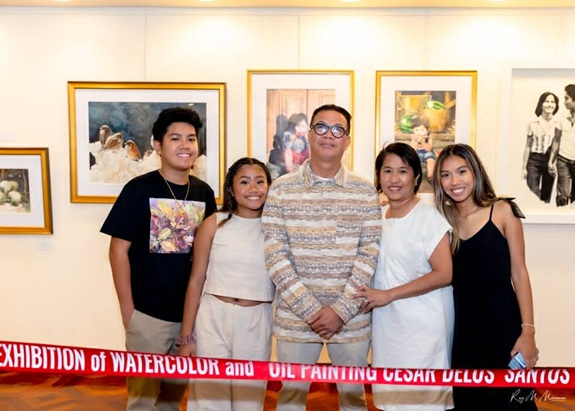
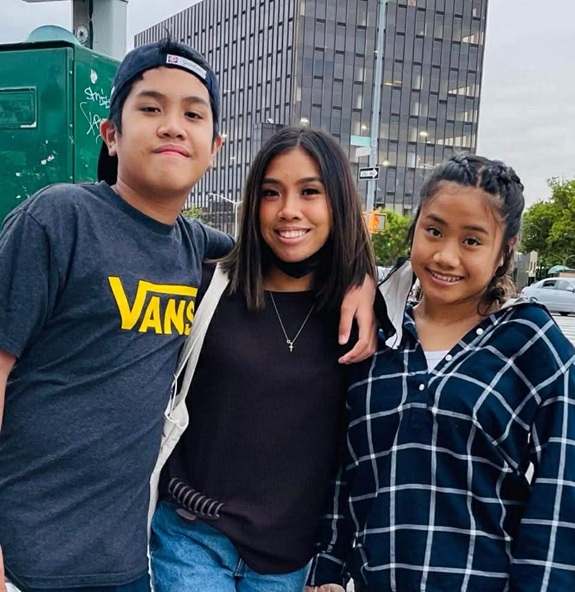
The Delos Santoses – husband Chito, wife Jocelyn, and their three children, Theia, Cestine and Neeko – have since built a life in Queens that balances their American present with a steadfast commitment to Filipino values.
“In New York, we became more conscious about holding on to our culture,” Jocelyn, an early childhood education teacher, said. “Back home, you don’t have to think about being Filipino, you’re born into it. But here, we make a point to speak Tagalog at home, cook Filipino food, celebrate fiestas and traditions, and stay connected to our community.”
Inside their home, Tagalog mingles with English, and stories of Batangas sit comfortably alongside their children’s New York experiences. Jocelyn said it was important that their children understood “where they came from, especially culturally, understanding the values of respect, hard work, faith, and close family ties.” Those values, she added, have guided them through the uncertainty of migration and the demands of a city is slowly becoming home.
“I’m happy to say that my children grew up confident navigating their everyday American lives but grounded in Filipino values,” she said. “Being Filipino isn’t entirely about where you live… it’s about how you carry your identity in your heart and how we pass it to the next generation.”
The family is a familiar presence at church gatherings, cultural events and community celebrations around the New York area.
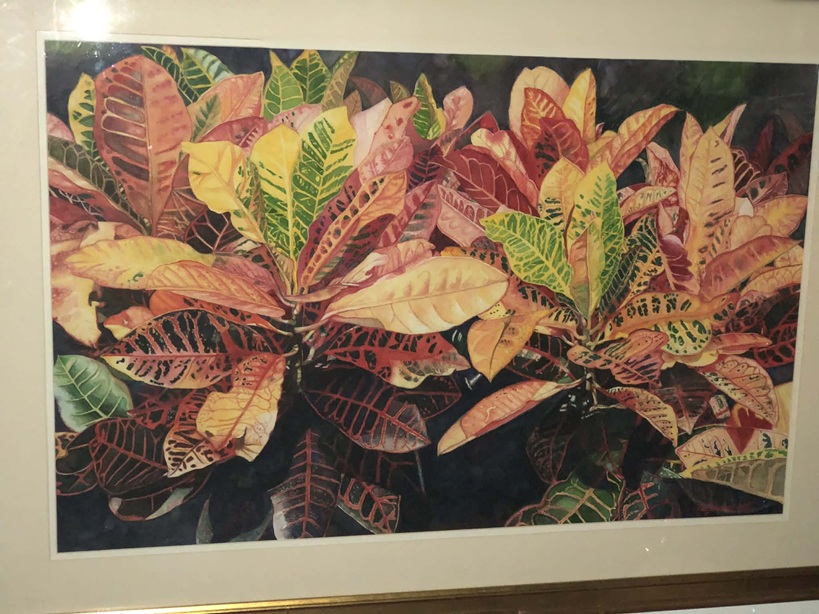
As an artist, Chito has carried Batangas with him onto every canvas. He has held more than 100 exhibitions in the Philippines and the United States, each one, he said, a meditation on connection.
“In every painting, I try to capture the emotion firstly,” he said. “Whether it’s quiet landscape paintings or scenes of everyday Filipino life, I would like my audience to feel something personal when they look at my work.”
He continued: “I often paint scenes inspired by life in the Philippines such as rural landscapes, and glimpses of Filipino daily life.” Those images, coupled with what he calls the Filipino traits of “tiyaga” (patience) and “sipag” (diligence) anchor his art.
“As a Filipino artist living abroad, a big part of my message is about identity and resilience,” he said.
His art is also about gratitude for the years of employment, for the community that supports him, and for the family that has stood by him through the transitions.
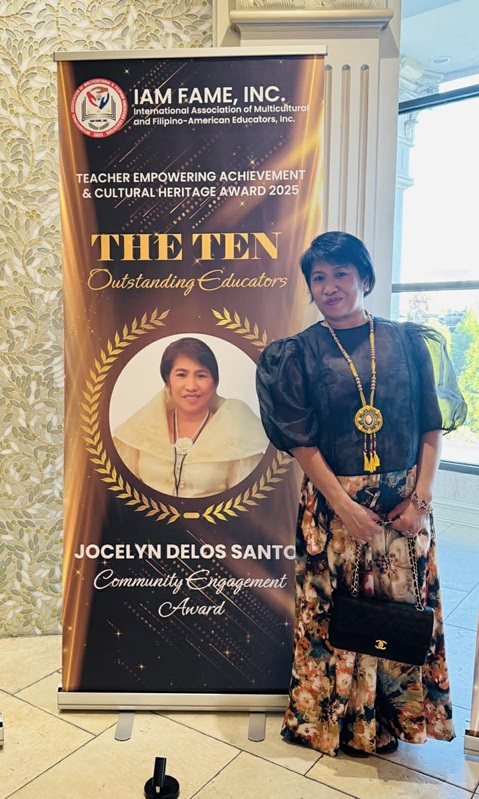
While Chito’s paintings tell stories of home, Jocelyn carries her heritage into the classroom. A preschool teacher who is also pursuing a master’s degree in Early Childhood Education, she is due to graduate in April in Chicago.
“I’ve always believed that learning doesn’t stop, no matter how long you’ve been teaching,” she said.
The decision has shaped both her teaching philosophy and her parenting.
“As a teacher and a mother, I believe we grow alongside our students and children,” she said. “We can learn a lot from them the same way they learn from us.” She tries to create a classroom that is “nurturing, engaging, and joyful,” hoping her students will “love learning as much as I do.” Education, she said, has always been central to their family life. “Education has always been very important in our family, not just in school but in everyday life,” she said. “My children know that it is acceptable to make mistakes as long as we learn from them. As parents we encourage them to follow their passions, never give up, and to celebrate all their wins regardless if it’s big or small.”
Those lessons show up clearly in their children’s lives.
Eldest daughter Theia found her own path in college through FIND, Inc. or the Filipino Intercollegiate Networking Dialogue, an organization that connects Filipino and Filipino American students across the East Coast through leadership and cultural programs. As a former student leader, she said the role allowed her to serve and represent her community.
“Making my family proud has always meant a lot to me,” she said. “As a former District III chairperson of FIND, Inc., I got to connect with fellow Filipino students, organize events, and support our community. It felt amazing knowing that what I was doing reflected the values my family taught me and that I was making a difference in students’ lives.” The experience, she added, made her “more confident in my Filipino skin” and strengthened her desire to honor where she comes from.
Cestine, the middle child, described growing up in a household of “driven, accomplished people.”
“Growing up as the middle child in a talented and accomplished family taught me how to be independent, adaptable, and motivated,” she said. “I learned early on how to find my own voice and work hard for what I want, rather than relying on comparisons.”
At times, she admitted, it was a challenge “not always being in the spotlight,” but it pushed her to become “resilient and self-aware.”
“I am most passionate about becoming the best version of myself, building a meaningful future, and making my family proud,” she said. “I care deeply about personal growth, helping others, and creating a life where I can be both successful and fulfilled.”
Youngest Neeko, a singer and theater arts student, juggles rehearsals, performances and academics. “Having to handle both my creative pursuits as well as school requires lots of discipline and time management,” he said. He maps out his schedule and sticks to it as much as possible, but he also leaves room for being with friends.
“Even though I have responsibilities, I still make sure to have fun no matter where I am or who I’m with. I’m also really grateful that my family supports me. They motivate me to give my best in both my studies and my passions.”
Beyond their individual achievements, the family remains deeply involved in the Filipino community in New York. Jocelyn choreographs traditional dances for Filipino events in Queens, including religious celebrations and the annual Filipino parade.
Chito, a former president of the Talisay Association USA (TAUSA), uses art to help plan gatherings and create props and projects that bring ‘kababayan’ from their hometown together. Those efforts, the family said, are more than just extracurricular activities; they are acts of preservation.
Asked what they would tell other Filipino families pursuing their dreams abroad, they offered advice based on their own journey.
“I would say, never forget your roots, no matter where life takes you,” Jocelyn said. “Make time for family, speak your language at home, and connect with your local Filipino community. All these things help you feel grounded and supported.”
At the same time, she added, migration also means opening oneself to new experiences. “Embrace the opportunities around you and be open to learning from your new environment,” she said. “Holding onto your culture doesn’t mean standing still, it means carrying it with pride while growing and thriving wherever you are.”
For the Delos Santos family, the American Dream is not a departure from who they are, but an extension of it: a family that crossed an ocean, held tightly to its identity and chose to share it with the city they now call home.