
AFTA’s Balik‑Turo at 33: How FilAm teachers built a quiet movement of diaspora-driven learning
By Ricky Rillera
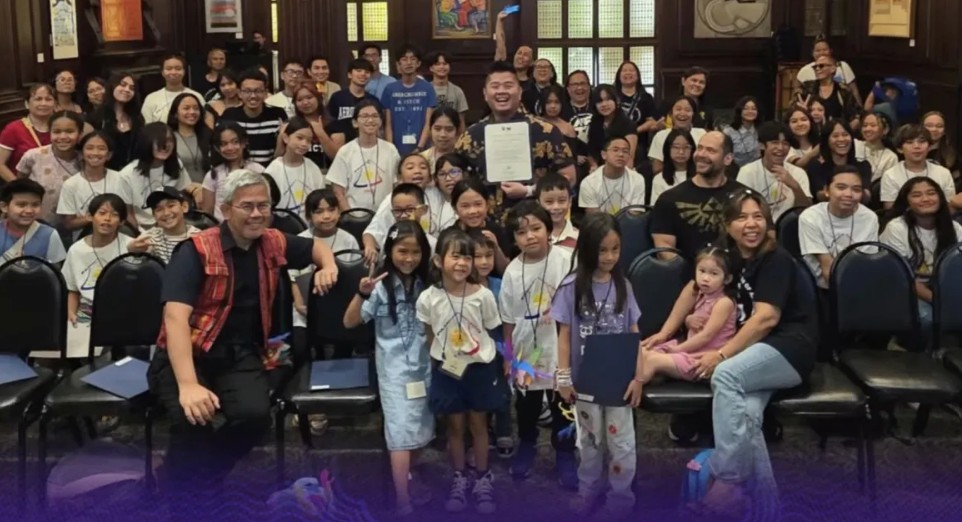
On a humid August morning in Manila, a group of teachers gathered inside a classroom at the Philippine Normal University. Some have traveled from remote provinces; others have flown from New York, New Jersey, and California. At the front stood a Filipino American educator who has spent decades teaching in the United States. Her voice was steady, her gestures familiar, her presence both foreign and deeply Filipino. She was here for one purpose — to teach back, to give back, to honor the place that shaped her.
This scene has repeated itself for more than 30 years. It is the living heartbeat of Balik‑Turo, the flagship program of the Association of Fil‑Am Teachers of America (AFTA). What began in 1993 as a modest “return to teach” mission has grown into one of the most enduring diaspora‑driven education initiatives in the Filipino world.
How AFTA was born
AFTA’s story began not in Manila, but in New York City.
In 1989, roughly 300 Filipino teachers faced visa uncertainty. They had come to the United States to teach in public schools, but shifting immigration rules threatened their ability to stay. Instead of giving up, they organized — advocating for themselves, for their students, and for the right to continue serving American classrooms.
Their efforts contributed to the passage of the Immigration and Nationality Act of 1990, which extended the H‑1 visa and opened pathways for Filipino educators to remain in the U.S. Out of this victory came a formal organization: the Association of Filipino Teachers in America, later renamed the Association of Fil‑Am Teachers of America.
AFTA was not born from theory or bureaucracy. It was born from struggle, solidarity, and the belief that Filipino teachers — wherever they are — carry a responsibility to uplift others.
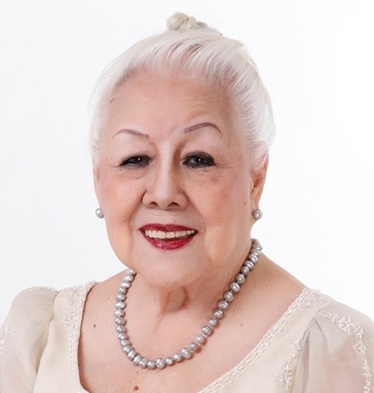
The visionary Lumen Castaneda
Among AFTA’s early leaders, Lumen Castaneda stands out as a force of nature. A retired New York City public school teacher, Castaneda brought charisma, discipline, and a fierce love for the Philippines into every room she entered. She served multiple terms as AFTA president and became the face of the organization during its formative years.
Castaneda deeply believed that Filipino teachers abroad had a duty to “return to teach,” not as saviors but as partners. She helped shape Balik‑Turo’s philosophy: that knowledge should circulate, not stagnate; that migration should not sever ties, but strengthen them; and that teachers, more than any other profession, carry the power to transform nations.
Her leadership gave Balik‑Turo its soul — a blend of professionalism, humility, and patriotic devotion.
How Balik‑Turo began
Balik‑Turo started in 1993 with a simple idea: Filipino American teachers could return home during the summer to share what they had learned in U.S. classrooms. It was initiated by then-President Lilia Juele and implemented in 1994. According to AFTA, President Fidel V. Ramos welcomed the first delegation in Malacanang. The early sessions were small — a handful of volunteers conducting workshops in borrowed rooms, often paying their own way. But the impact was immediate. And soon, AFTA said, several colleges and universities, as well as provincial participants from Luzon and the Visayas, came on board.
Teachers in the Philippines were hungry for new strategies, new perspectives, and new ways of thinking about learning. AFTA volunteers introduced approaches in literacy, Mathematics, Science, classroom management, and assessment that were not yet common in Philippine schools. More importantly, they brought encouragement — a reminder that Filipino teachers were part of a global profession, connected to colleagues across oceans.
Balik‑Turo is traditionally held during the U.S. summer break, usually July to August, when FilAm teachers are free from their school-year duties. This timing allows educators from New York, New Jersey, California, and other states to travel to the Philippines without disrupting their U.S. teaching schedules.
During these sessions, AFTA volunteers teach a wide range of topics: project‑based learning, differentiated instruction, literacy strategies, Math and Science pedagogy, classroom management, curriculum mapping, assessment design, and technology integration. During the pandemic, the Balik‑Turo Webinar Caravan expanded this reach, offering digital teaching strategies and drawing more than 1,200 teachers from across the Philippines and the U.S. Typically, 10 to 20 FilAm teachers travel for each in‑person mission, while hundreds of Filipino teachers attend the sessions. In virtual years, participation has reached into the thousands.
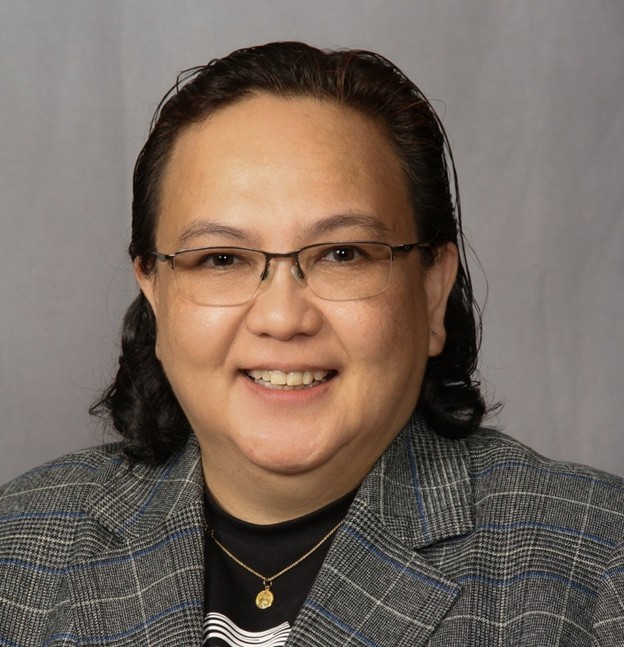
A new generation: Rena Pedaria
Today, AFTA is led by Rena O. Pedaria, an adjunct lecturer at the City University of New York. Pedaria represents a new generation of FilAm educators — globally trained, community‑rooted, and deeply committed to the Philippines.
Under her leadership, AFTA has strengthened its institutional partnerships, including with Bukidnon State University, where the organization conducted its third Balik‑Turo program in 2025. Pedaria has emphasized continuity, collaboration, and the importance of building long‑term relationships with Philippine schools and universities.
She often describes Balik‑Turo as “a circle of learning,” where teachers from both countries grow together. Her leadership ensures that the program remains relevant, responsive, and grounded in the realities of modern education.
Balik‑Turo is more than a training program. It is a model for diaspora‑driven nation‑building. The Philippines faces persistent challenges in education — overcrowded classrooms, resource gaps, uneven teacher training, and learning losses exacerbated by the pandemic. Balik‑Turo does not claim to solve these systemic issues. But it does something equally vital: it creates pockets of innovation, inspires teachers who often feel unseen, and strengthens the bridge between the Philippines and its global community.
The story of Balik‑Turo is about teachers who believe that returning home, even briefly, can change lives. It is the story of a diaspora that understands that giving back is not an obligation, but a privilege. And it is the story of a nation whose greatest resource has always been its people — at home and across the world. – Philippine Daily Mirror