
Watching Manila from the Bay: A Filipino American’s EDSA awakening
By Allen Gaborro
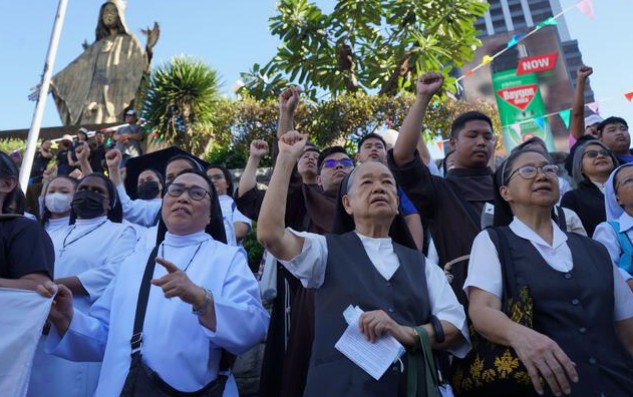
Reflecting on the intoxicating days of the 1986 EDSA Revolution reveals a pivotal moment in both Philippine history and in my personal journey. The event stripped away my innocence of the real world even as it resurrected Philippine democracy.
The EDSA People Power Revolution helped refine me into the person I am today. It was then that I discovered the impossible was possible—that goodness, freedom, and justice were not figments of the imagination, but ideals not only to be pursued but to be achieved.
These lessons in life have stayed with me, never to leave my side. As a Filipino American, I found faith in the belief that there are no boundaries to moral uplift—a conviction that People Power emblazoned in my mind.
Back in the day, I played pickup basketball every Saturday afternoon near the residence where I lived with my parents in the San Francisco Bay Area.
After finishing my weekly hoop session one particular Saturday, I headed home, not knowing that an intense drama was unfolding across the Pacific.
The date was February 22, 1986.
As I entered the house, I was taken aback by the small gathering of my parents’ friends in the living room. I was further astonished to see Father Arturo there; he was a Filipino priest from the nearby Catholic parish. I thought his presence portended something ominous. My mother and father never mentioned they were having guests that day—least of all a man of the cloth. They explained that their visitors were as unexpected for them as they were for me.
All eyes were glued to the television during a CNN broadcast from Manila. We stood transfixed as two of the most powerful men in Ferdinand Marcos’s regime, Defense Minister Juan Ponce Enrile and Vice Chief of Staff of the Philippine Armed Forces Fidel Ramos, announced in a recorded press conference their sudden defection. There could be no doubt that the Philippines was balanced precariously on a knife’s edge.
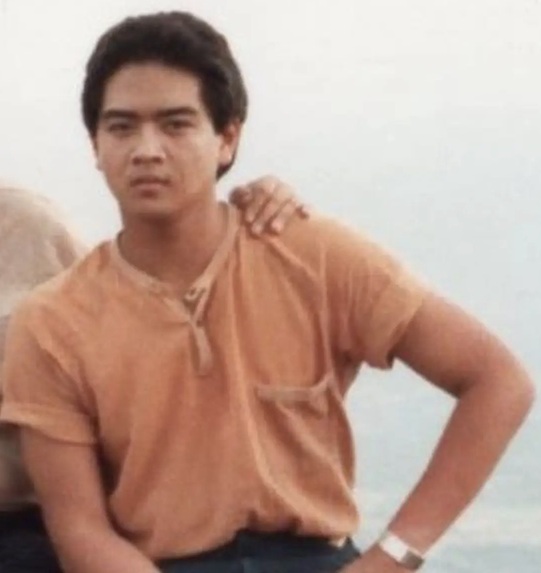
At 19, back in 1986, I possessed a passive fascination with public affairs. While I didn’t track every issue in depth, I was no tranquil bystander; I had sufficient knowledge to hold my own in opinionated discussions.
I was following Marcos’s snap election that preceded People Power. Designed to strengthen his mandate to rule, the election instead turned into an exercise in fraud and deception. Just like other Filipinos, I watched with anger and frustration as Marcos and his loyalists attempted to steal the ballot. It looked hopeless; it didn’t seem like Cory Aquino and the brave yet overmatched “Yellow” opposition forces had a chance.
I feared for the Filipino people, unaware that there was a human-wrought providence at work—one inscribed for and by Filipinos themselves. Driven by a transformative stream of conscience and consciousness, Filipinos from every corner of society put their lives on the line. On behalf of family, friends, and perfect strangers alike, they dared to stand up to the dictator so they could finally set themselves free.
I could not believe what was transpiring over that eventful succession of days. Filipinos were reaching a sublime, transcendent epiphany in which they, largely of their own accord, proudly raised and waved the standards of unity and liberty at the eleventh hour of their national survival, all the while never knowing for sure whether a clear and present danger would materialize.
Thanks to People Power, my fellow Filipinos and I became reacquainted with our shared values and principles as human beings. As with other Filipinos, People Power awakened in me an absolute clarity of wholeness, enlightenment, and rebirth. From then on, I would view everything in a different light—with a purity of intent, a critical appraisal, and a sense of boundless possibilities.
A lot has happened since 1986. Empathizing with the post-EDSA I generations, I’ve experienced lighthearted springtime and dusky winter, tender and tough love, memorable success and failure, and good fortune and bad.
Between February 22 and 25, 1986, both as a collective of Filipinos and as an individual Filipino, we were able to catch lightning in a bottle and negotiate remote prospects into an enduring tale of emancipation. That’s something no one can ever take away from us.
