
Zaldy Alima: Inspiring students to love Science, curiosity, and exploration
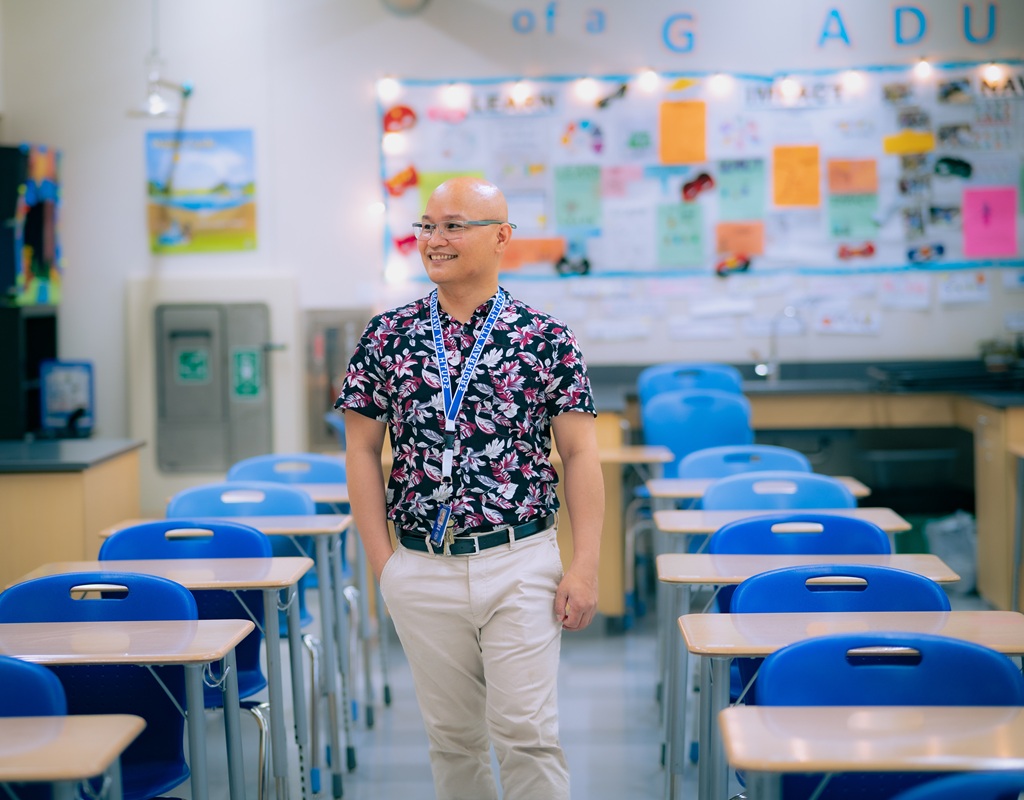
By Catherine Espejo
Growing up in Surigao del Sur in Mindanao, young Zaldy Alima had his sights set on becoming a medical doctor, only for the chance to wear a white coat. However, that all changed when he took high school Chemistry, which inspired him to become a high school science teacher.
Alima said his teacher was a biochemist and engineer who led him through labs and experiments. He liked the impact his teacher had on him, which fueled his curiosity about learning and his love of exploration. Now he’s been teaching Science for 20 years.
“I love Science, and I want to share it with my students,” said Alima. “I want to inspire the next generation.”
Alima attended Surigao del Sur State University (now North Eastern Mindanao State University) for his bachelor’s degree, where he majored in Crop Science. He pursued higher education, earning his master’s degree in Science Education from Ateneo de Manila University. Currently, Alima is pursuing a doctorate in Science Education at the University of Perpetual Help System DALTA in Las Piñas, Philippines.
Alima told The FilAm that he’s always known he wanted to pursue higher education to become an expert in the field. He said he hopes to inspire people in the Philippines and around the world.
In 2021, Alima migrated to the United States for a J1 Teacher Cultural Exchange Visitor Program. He came to the United States to teach a Science subject and share his Filipino culture with students. He taught them Philippine history, Geography, and Culture in his Science instruction.
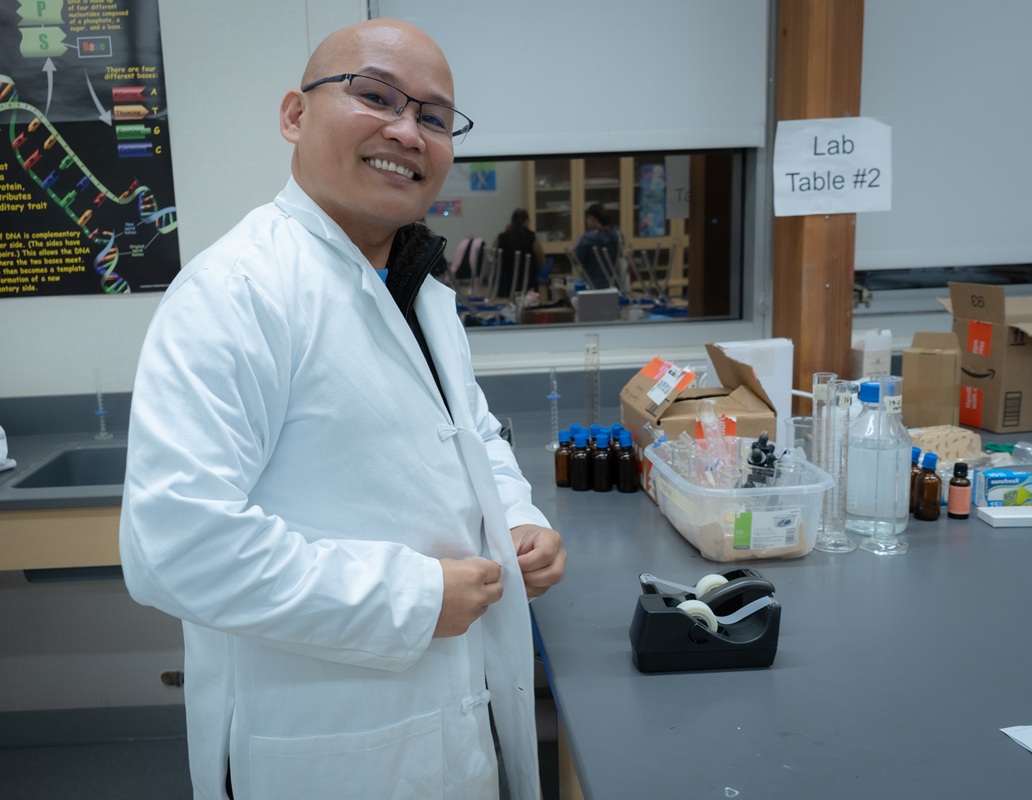
Alima now lives in California, where he teaches Biology, AP Biology, and Earth Science at South Francisco High School.
“I always believe that we teachers have the power to create ripples of change,” he said. “And influence a lot of students.”
Noticing low student motivation when he first arrived in California, Alima introduced project-based learning to his students through the Genius Hour Passion Project. It was inspired by Google and focused on the 80-20 rule in education and creativity. He explained to The FilAm how it worked: Students would work on the curriculum Mondays through Thursdays, and on Fridays they would investigate environmental problems they cared about, design experiments, analyze data, and present their findings in a Science exhibition, with other students and teachers witnessing their projects.
Alima also integrates art into Science through BioArt, which has his students explore genetics and mutations through models, multimedia, and even cosplay as their favorite DC and Marvel characters. He said that by dressing as superheroes, students learn that mutations, often seen as harmful, can also drive innovation in Medicine and Agriculture.
“Science doesn’t have to be intimidating,” Alima explained. “It should feel human, creative, and meaningful.”
In addition to these projects, he introduced student-led Biology conferences, where students curated both digital and physical portfolios that documented their evidence of learning throughout the year, which they then presented to parents, guardians, and invited teachers who served as panel members.
Some of his former students are now doctors, nurses, medical technologists, engineers, pilots, accountants, and educators. Alima said they connect with him on social media platforms where they share their accomplishments. He said he’s very proud of them.
Additionally, Alima is passionate about research. He collaborated with scientists at the University of the Philippines in Diliman, where he was a summer apprentice in a mammalian cell laboratory, a type of research that involves studying cellular processes in a controlled environment. He studied mushroom cultivation and the genotoxicity of oyster mushroom extract. He was highly interested in cancer research after losing his father in 2013 to lung cancer.
“I really wanted to educate myself on how cancer cells formed, developed, and metastasized,” he said. “I attended several trainings, workshops, and organizations about cancer research.”
Beyond the classroom, Alima mentors students in advanced research, including guiding a robotics team whose project on DNA-assisted drug delivery for brain cancer was presented at a UC Berkeley competition.
Alima now serves as the editor ofGURO Chronicles, a global Filipino educator newsletter that highlights teaching journeys, classroom innovations, and best practices in education.
However, in the meantime, he’s writing a book titled “Teaching Science Without Borders.”
Alima described it as providing accessible materials and strategies for teaching about science, using whatever resources are available. He drew inspiration from his colleagues and his own teaching experiences. He said he is following what his Biology professor told him at Ateneo about leaving three legacies behind.
“First is to have children because they carry your genes. Second, to plant trees because they sustain the planet and live longer than humans,” he said. “Lastly, to write a book because books preserve knowledge and last forever.”
