
After the doors are closed: A Filipino priest’s post-Christmas melancholy in America
By Father JM Manolo A. Punzalan
The Christmas season places a profound demand on both body and spirit, especially for us Filipino priests ministering in America. For nine straight days, my life revolved around Simbang Gabi every day at either 5 in the morning and again at 7 in the evening. My days began before dawn and ended late at night. Even after the novena ended, my body continued to wake at 4 a.m. as if it had memorized the rhythm of sacrifice.
Each day unfolded in a relentless but familiar pattern: the early morning Simbang Gabi Mass, followed by the daily 12 noon parish Mass, and then long hours spent preparing the parish for the Solemnity of Christmas.
Then, there were meetings and rehearsals, confessions and pastoral visits, phone calls and emails that never seemed to end. I checked regularly on the Pastoral Center renovation, made quick decisions while shopping for church decorations, and labored late into the night over bulletins and the parish Christmas Gazette. And then, as evening came, I returned once more to the altar for the 7 p.m. Simbang Gabi.
I moved from one responsibility to another, carrying not only my own fatigue but also the homesickness, hopes, and quiet longings of a migrant community. Sleep came in fragments. Energy had to be rationed carefully. Each morning demanded a conscious act of resolve.
The exhaustion did not arrive suddenly. It crept slowly and settled deep. I carried it quietly and accepted it as part of the grace of ministry. There were days when my body protested, nerves stretched thin, a slight fever just days before Christmas. Yet I never thought of it as an external burden. This was the work entrusted to me. Ministry does not wait until you are rested. It comes precisely when there is little left to give.
Christmas Day itself came with its own intensity. By 11:30 in the morning, the seventh and final Mass of the Solemnity of Christmas was completed. As I returned to the sanctuary and finally took out the tabernacle key, a wave of relief washed over me. That small, familiar gesture signaled that the last Mass was truly over. Not with triumph, but with quiet gratitude, I realized I had made it through. I allowed myself, at last, to pause. The labor, for now, has finished.
Then came the practical stillness that follows great celebration.

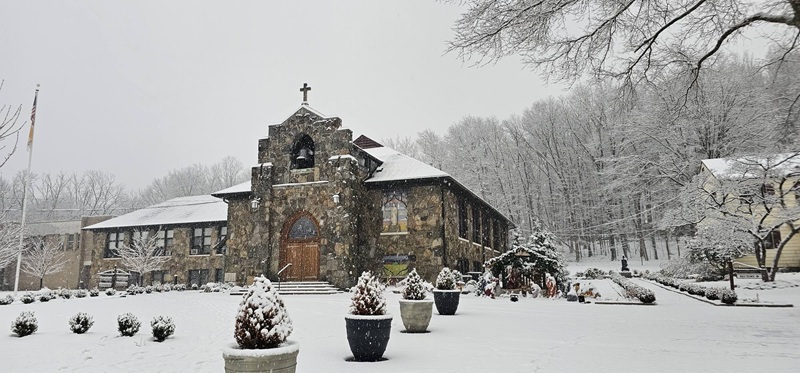
After Mass, before returning to the rectory, I walked around the Church and parish grounds one last time. I unplugged the Christmas lights, their soft glow yielding to daylight. I reprogrammed the heating system to “unoccupied,” locked the elevator, and checked every door, front and side, sanctuary and hall. Each small action felt deliberate, almost ritualistic, signs that the crowds had gone home, that the season had shifted, that the church could now rest.
Only then did the deeper silence arrive.
The rectory office was closed. Closing the doors marked more than the end of a celebration. It signaled a passage from abundance to restraint, from noise to stillness, from shared joy to personal reckoning. When I locked the rectory door, I knew no one would come knocking that afternoon.
And I was alone.
This solitude did not frighten me. I had lived with it long enough to recognize it as a companion. As an introvert, I have learned to draw strength from silence. I did not crave company. That season of longing had already softened with time.
Yet something stirred beneath the calm. It was not loneliness in the usual sense, but a quiet emptiness, an ache without a clear name. Perhaps it was the residue of having poured myself out completely, Mass after Mass, decision after decision, prayer after prayer. Perhaps it was the human cost of standing at the center of many lives and then returning, at day’s end, to a rectory room that asked nothing of me. I had been fully present for others, and now I stood face to face with myself.
As evening fell and the winter sky darkened, a gentle melancholy settled in. Not despair, but understanding. Not regret, but truth. Ministry is, by nature, asymmetrical. We give and give, often receiving in ways that are quiet, delayed, or unseen. The silence that follows is not emptiness; it is vulnerability.
I did not rush to make this feeling more spiritual. I allowed it to be what it was.
Perhaps this, too, belongs to Christmas. The God who chose to be born in the quiet of night knows solitude well. The Word made flesh entered the world silently, resting in borrowed space. Seen in that light, my own solitude felt less like absence and more like communion.
The day grew darker. The rectory remained quiet. And the silence stayed, no longer an enemy, but an offering.
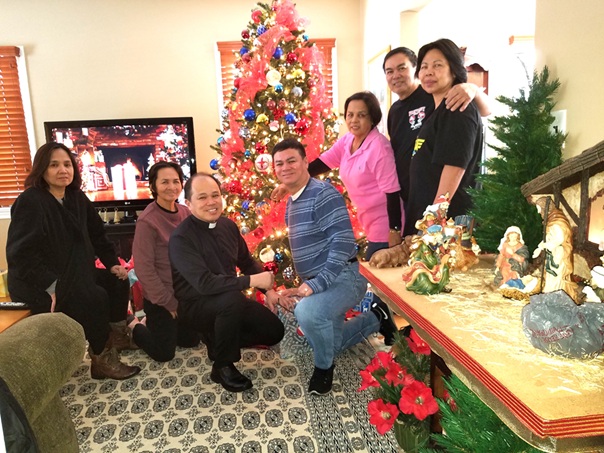
Then, by 6 in the evening, I picked up my coat and keys and got into the car. I took a 45-minute drive to join my brother and his family for Christmas dinner. The road was calm, the traffic light, the sky already settling into night. I did not bring my homily notes, my calendar, or my worries—only myself. That evening, I was no longer the one presiding, preparing, or carrying the weight of the season. I was simply a brother, an uncle, received, not needed; welcomed, not responsible.
And in that quiet return to family, I realized that even priests must sometimes leave the sanctuary, close the doors, and allow Christmas to find them in a different way, through shared food, familiar laughter, and the grace of being home, if only for a few hours.
Father JM Manolo A. Punzalan is the rector at Immaculate Conception Church in Mahwah N.J. He is also the director of the Archdiocese of Newark’s Filipino Apostolate.
