
Remigio Cabacar, the last surviving WW II veteran: A life lived in courage, sacrifice, and the value of freedom
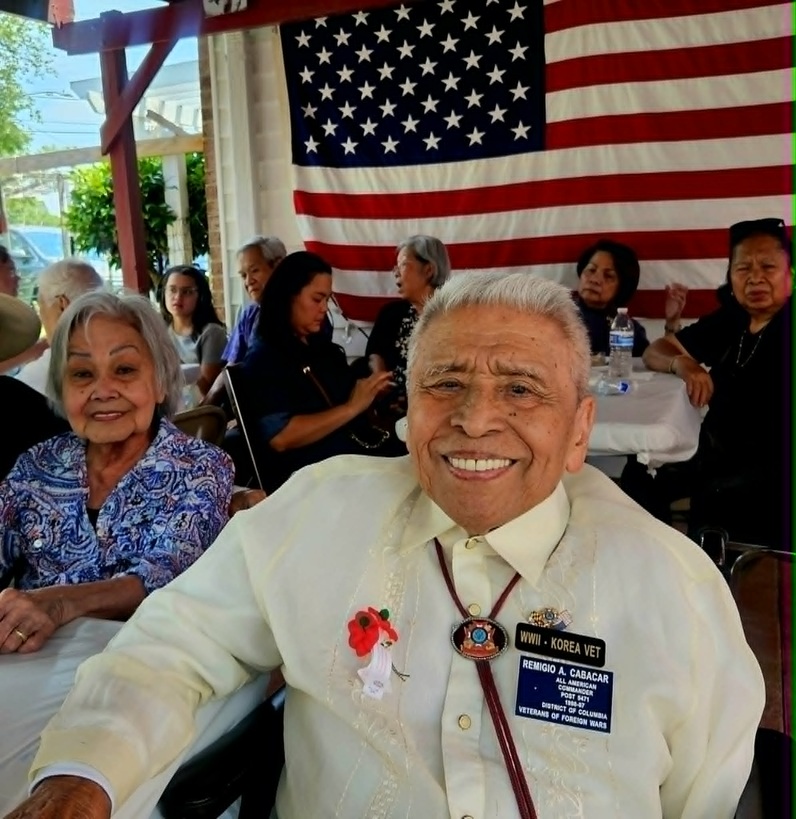
By Cristina DC Pastor
For nearly a century, he was a witness to history–from the hardships of war to the blessings of peace, from raising a family to becoming a great-grandfather.
Today, at 98 years old and approaching his 99th birthday, Remigio “Rey” Cabacar, the last surviving World War II Filipino-American veteran in the Washington, D.C., area measures his life not by medals or accolades, but by the people who surround him every day.
His daughter, Vilma Megorden, apologized for the delay in arranging this interview. Life has been especially busy as she and her family recently moved both of her elderly parents into their home after they had spent 46 years in the same house in Fort Washington, Maryland. It was a “major transition,” she told The FilAm.
Her father suffered a stroke two years ago that left him with paralysis on his left side, and he now relies primarily on a wheelchair. Yet his spirit remains remarkably strong. His mind is sharp, his memory vivid, and his passion for sharing stories from his years in the U.S. Navy remains undiminished.
His wife, Carolina, is 99 years old. Together they have shared nearly 72 years of marriage—and remain devoted to each other. Their four children now work together to care for them, rotating weekly so that neither parent is ever without family close by.
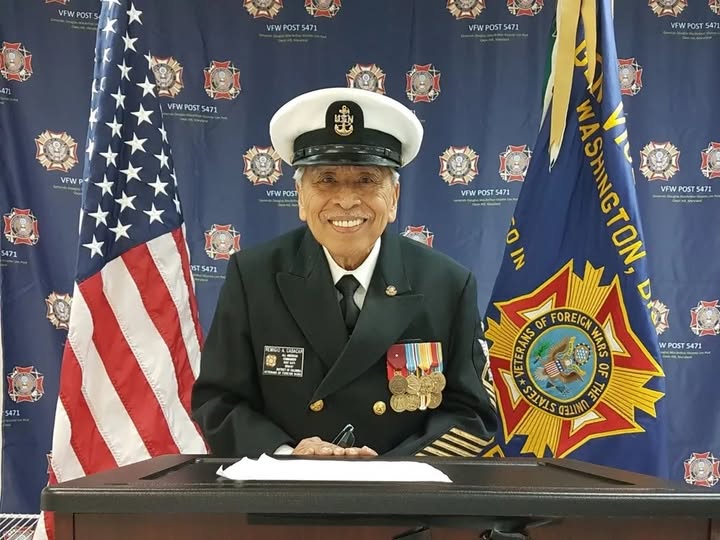
Despite his physical limitations, he still attends meetings of his Veterans of Foreign Wars post whenever possible and participates in events organized by Filipino veterans’ organizations. Staying connected with fellow veterans continues to give him purpose.
He continues to be an advocate for the Filipino veterans who were promised benefits the U.S. government has failed to deliver: compensation and family reunification.
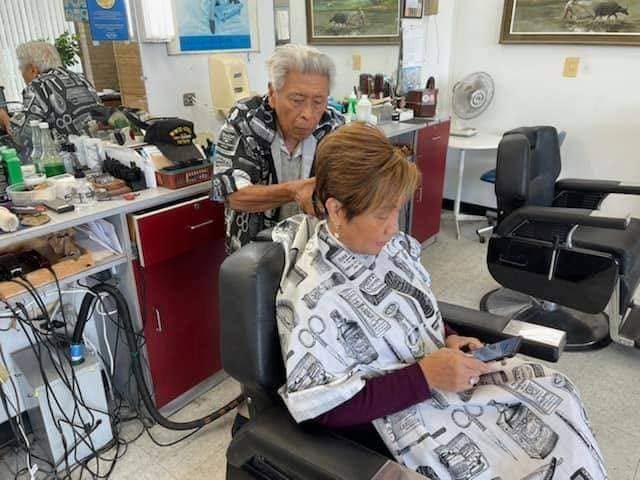
Upon retirement, he worked at the FBI, according to community leader Bing Branigin, where he served three directors. He retired in his 70s. Then he bought a barber shop which he named The Friendly Barber Shop, in Oxon Hill, MD. Up until 2023, he had been cutting hair for members of the community and the public.
When asked by The FilAm how he is doing, he answers with the wisdom of someone who has experienced almost a century of life.
“I am like the weather,” he replies. “It’s up and down. I feel ‘up’ because my surroundings are helpful, but ‘down’ because my activity is limited. Sometimes I reminisce about the past.”
It is a simple yet profound description of aging. While his body no longer allows him the independence he once enjoyed, gratitude fills his days because he is surrounded by family who cares deeply for him.
One question we felt uncomfortable asking but did just the same: How does it feel to be the last surviving veteran in the D.C. area?
He answers with both pride and sorrow: “I feel sad. When I first joined the Navy, there were about 300 of us who joined together. It makes me sad to know that they have all passed away.”
Survival can sometimes feel lonely, he seems to be saying. Each passing year has taken another shipmate, another friend, another witness to the extraordinary events of World War II. Yet rather than dwell on loss, he chooses to remain engaged with life.
Volunteer work continues to occupy his time. At his VFW meetings, he still enjoys preparing simple foods for fellow members. Before age and illness slowed him down, he loved gardening, barbering, and cooking.
Today, he has found quieter pleasures. His daughter Vilma has planted vegetables on the patio, and he and Carolina spend time sitting outdoors together, admiring the growing plants, blooming flowers, tall trees, and birds that flutter by.
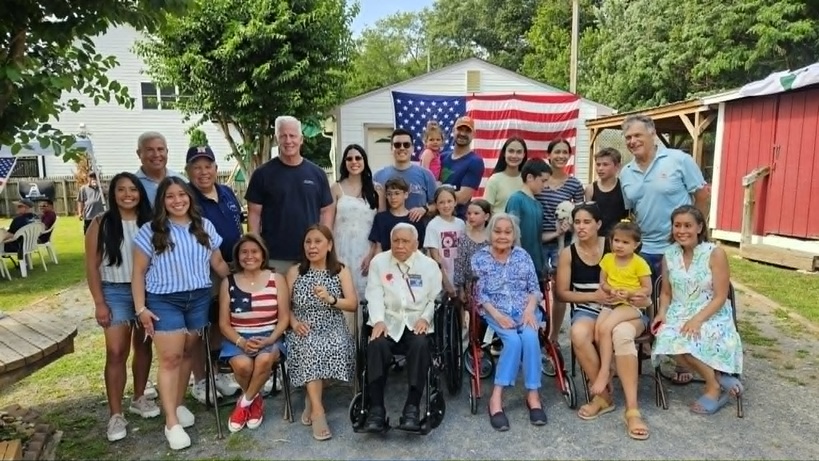
He and Carolina raised four children who have built families of their own. Today, he proudly counts 10 grandchildren and numerous great-grandchildren among his greatest blessings. One granddaughter, Mary, lives nearby with her four children and visits frequently. The rest gather during holidays whenever possible. And when the younger generations come to visit, the stories begin.
“I tell them stories all the time when I can,” he says.
Those stories are more than family conversations. They are stories about sacrifice, courage, perseverance, and the value of freedom told by someone who experienced them firsthand.
This is what his daily routine looks like: He wakes every morning at 5:00 a.m. but remains in bed until 6:00, quietly planning the day ahead. Perhaps a doctor’s appointment, a VFW meeting, or one of his favorite weekly traditions: Wednesday lunch at McDonald’s with friends.
Exercise follows breakfast. Then comes time outdoors on the patio, conversations with family members and caregivers, television news, and sports. By evening, he watches the news before falling asleep around 8:00 p.m.
The schedule may seem ordinary, but it depicts the determination to keep moving forward despite physical challenges.
He celebrates what remains intact: his mind, his memories, and his ability to enjoy those around him. His greatest source of strength, however, may well be the woman beside him.
“My wife, Carolina, is my ‘number 1,'” he says simply.
Faith also continues to sustain him. Unable to attend church in person, he faithfully watches Catholic Mass every Sunday morning. Before moving into his daughter’s home, a deacon regularly visited to bring Holy Communion. He recalls being very active in church during his younger years. Today, his worship has become quieter, but no less meaningful.
When asked what matters most in life, he is unlikely to speak first of military service. He would probably mention his wife. His children. His grandchildren. The vegetables growing on the patio. A Wednesday lunch with friends…
These quiet moments, accumulated over 98 years, are the true measure of Rey Cabacar’s life well lived.