
Why corruption persists: Young FilAms look to history, entrenched political elites
By Cristina DC Pastor
As the Philippines confronts renewed scrutiny over allegations of corruption, particularly involving government spending and flood-control projects, a group of young Filipino Americans are asking a difficult question: Why does corruption persist in the Philippines?
For these young observers, the answer cannot be reduced to individual politicians or a single administration. Their perspectives point instead to a complicated mix of colonial history, concentrated political and economic power, weak institutions, misinformation, inequality and the continuing influence of powerful foreign interests.
Their views also reflect an emerging generation of Filipino Americans who are following Philippine politics closely—even from thousands of miles away—and increasingly seeing corruption as an issue that affects not only government but ordinary families.
‘It’s a systemic issue’
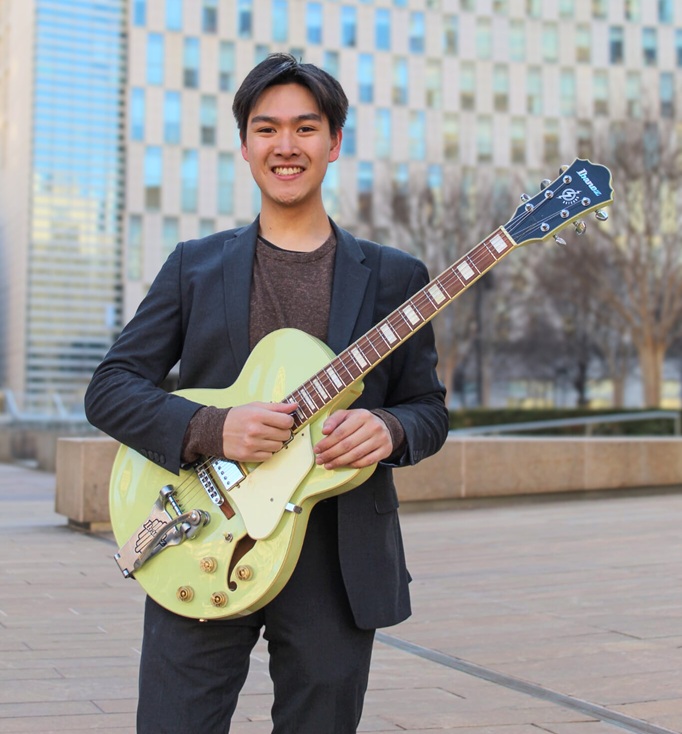
For Marcelus Dacanay, 22, an accelerated M.A. candidate in Economics at Fordham University, understanding Philippine corruption requires looking at the country’s history.
Marcelus said the Philippines is hardly unique in experiencing corruption. But he believes its particular history of colonization by Spain and the United States shaped institutions and political relationships that continue to influence the country.
He pointed to the Spanish-American War, Philippine independence, and the country’s continuing strategic relationship with the United States. He was careful not to place the blame entirely on the United States. Rather, he said, corruption needs to be understood in terms of who benefits from existing systems of power, including political elites and, at various points in history, foreign powers pursuing their own interests.
The Philippines, he suggested, has repeatedly found itself navigating the interests of larger powers while ordinary Filipinos continue to bear the consequences.
“It’s difficult,” he said, particularly because corruption cannot simply be attributed to the character of the Filipino people.
Marcelus rejected the idea that Filipinos as a people somehow possess an inherent tendency toward corruption.
“You can never generalize,” he said, pointing to the Filipinos he has encountered as people who care deeply about family, community and one another.
For him, the persistence of corruption is more accurately understood as a systemic problem.
Poor or inadequate education can make it difficult for citizens to understand how government works and how political decisions are made. Politicians can make promises they fail to keep, while misinformation can shape how voters understand political history and current events.
The result can become a vicious cycle: citizens lose faith in institutions, become discouraged from participating, and corrupt political structures become more difficult to challenge.
Community as a force for change
Marcelus believes one answer lies in community organizing and education.
“Community is a huge aspect,” he said, emphasizing the strength that comes when people build networks around shared concerns.
When citizens are organized and informed, he said, it becomes more difficult for corrupt systems to operate without scrutiny.
Education, he added, should go beyond formal schooling. People need to understand political systems, recognize who influences elected officials and identify where their own priorities fit within the political process. That kind of civic education, combined with community outreach, could help citizens become more effective participants in democracy.
‘The system itself is broken’
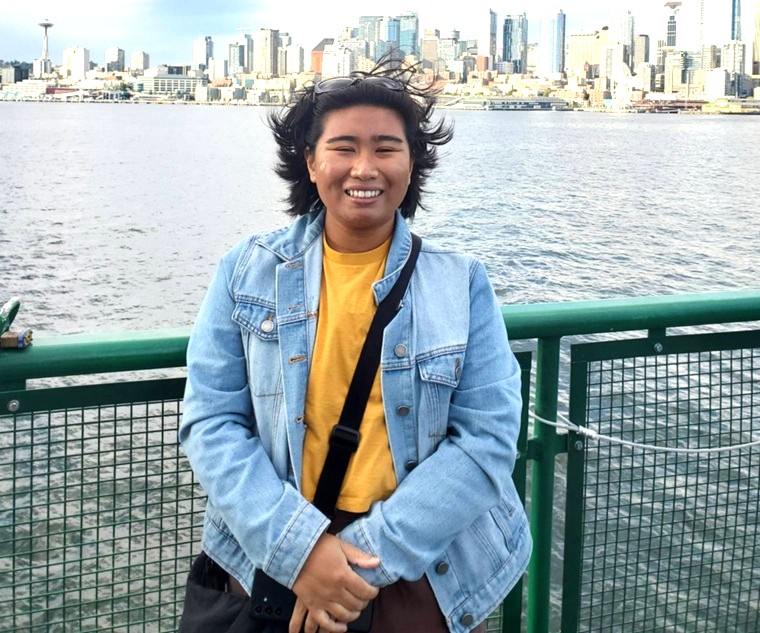
Shea Formanes, a 24-year-old filmmaker from Seattle, has been closely following developments in the Philippines.
She said she gets updates through news organizations such as NBC, AP and The New York Times, as well as through conversations with family and relatives.
For her, corruption is inseparable from the Philippines’ enormous gap between rich and poor. She pointed particularly to controversies surrounding government funds intended for flood-control infrastructure.
“It’s really disheartening to see the government that is supposed to serve and protect act in their best interest, hoarding the wealth,” she said.
The alleged misuse of money intended for flood-control projects, she said, illustrates how a system can become so broken that corruption continues for years before it receives serious public attention.
She also expressed skepticism that politicians would willingly investigate themselves.
“It’s like the call is coming from inside the house,” she said.
Her comments reflect a broader frustration among younger Filipino Americans who see political accountability as difficult when those with the power to investigate are themselves connected to the political establishment.
Shea believes the younger generation has an important role in challenging distorted versions of history. For her, political mobilization—not simply elections—will be necessary for meaningful change. She said citizens need to become more involved and organized if they want political systems to change.
‘Political and economic power’ concentrated among elites
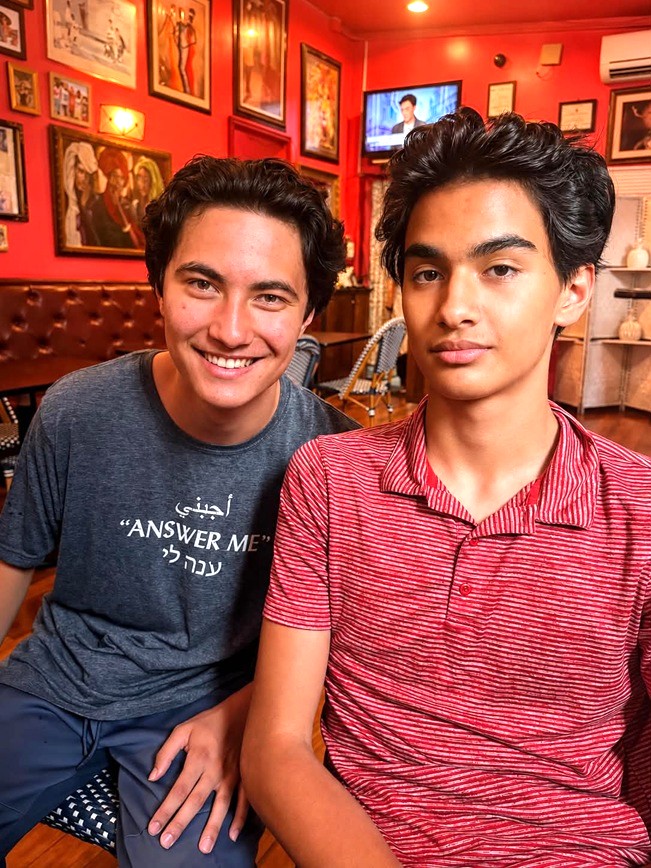
For Lucas del Rosario, a 20-year-old rising junior at American University, the roots of corruption are closely tied to the concentration of political and economic power.
“It’s complicated,” he said, but one of the biggest reasons corruption persists is that political and economic power has historically been concentrated in the hands of a relatively small elite.
He traced that pattern partly to the country’s colonial history, when wealth and political influence became closely intertwined under Spanish and American rule. He also raised the role of the United States during the Marcos era.
“The first Marcos was allowed to be a dictator by the United States,” he said, arguing that foreign intervention has historically influenced political developments in the Philippines.
But Lucas also emphasized that corruption is not uniquely Filipino. The United States, he noted, faces its own concerns over money, lobbying, special interests and political influence. The more important question, he said, is whether institutions are strong enough to investigate wrongdoing, enforce ethics laws, and hold public officials accountable.
“No country is perfect,” he said. Accountability is an ongoing challenge everywhere.
For Lucas, the consequences of corruption become most visible when public money intended for essential services disappears or is misused. Infrastructure, flood control, education, healthcare and disaster preparedness all depend on public funds reaching the people for whom they were intended. When that money is diverted, he said, “ordinary families pay the price.”
He said the Philippines needs leaders with integrity, independent institutions capable of investigating corruption without political interference, and citizens willing to demand accountability at the ballot box.
He said transparency is not simply an abstract democratic principle. It is directly connected to whether communities have adequate roads, flood protection, healthcare and other basic services.
A history of colonialism and political instability
His younger brother, Leonardo del Rosario, 17, a rising senior at The Browning School on Manhattan’s Upper East Side, takes an even broader historical view.
He compared the Philippines with other countries that experienced colonial exploitation and political instability, including the Democratic Republic of the Congo and Syria. He argued that colonial powers often extracted resources and left behind institutions that struggled to function effectively after independence.
In the Philippines, he said, the legacy of Spanish and American rule was followed by periods of authoritarianism and continued foreign influence. According to Leonardo, bureaucratic institutions can become overwhelmed by the weight of longstanding social and economic problems.
Authoritarian governments can sometimes appear to offer quick solutions because they can make decisions without the checks and balances of democratic institutions—but that efficiency comes at the cost of individual liberties and accountability.
He also pointed to the role of global superpowers in shaping political systems in former colonies. For him, the Philippine experience is part of a much larger historical pattern of suppression, exploitation, abandonment and post-independence political instability.
History explains but is not an excuse
Throughout their various views, the young Filipino Americans interviewed by The FilAm share one important conclusion: History may explain corruption, but it cannot be an excuse for accepting it.
Leonardo believes the Philippines can learn from countries that have attempted to strengthen transparency and public participation. Among the measures he cited are stronger independent auditing, greater disclosure of government spending, investigative journalism and giving communities a greater voice in local budgeting and decision-making.
The more citizens can see where public money goes, he said, the more difficult it becomes for corruption to flourish unnoticed.
“Democracy is strongest when institutions, not individuals or celebrities, hold power accountable,” he said.
