
Elderly Filipino women aging in isolation; how can the community help?
By Cristina DC Pastor
They came to America in the late 1960s and 1970s, young, educated and determined to build lives of their own.
Many were professionals. Some came alone, leaving families behind in the Philippines. They established careers, bought homes, built friendships and embraced the independence that America offered.
Now, decades later, many of these women are entering their 70s and beyond, and a new reality is emerging: They are aging in isolation. They are living alone in their New York apartments and navigating the ordinary tasks of daily life as age, illness or memory loss begins to interfere.
Architect and preservationist Roz Li, who knows many women from that generation, said their independence may have served them well in their younger years but has created challenges as they age.
“They live alone in their apartments or condos,” Li said appearing on Makilala TV on the topic of “Elderly women aging in isolation in NYC” to call attention to the plight of these women.
“It is not an issue with the living situation. It’s more the everyday reality, how to go about their activities.”
Li said she is part of that generation.
“The women I know, we were all professionals when we came here in the late sixties and seventies. We were single and hit our dreams,” she recounted. Many never married. Others became widows without children. Some have relatives in the Philippines but no immediate family in the United States.
“A lot of the women came here by themselves and were independent,” she said. “That was part of the problem. They were very independent and didn’t think ahead for what may happen in their old age.”
Another guest panelist was Sally Ojeda, who was caring for some of the women. She said caregiving is far more demanding than simply helping someone around the house.
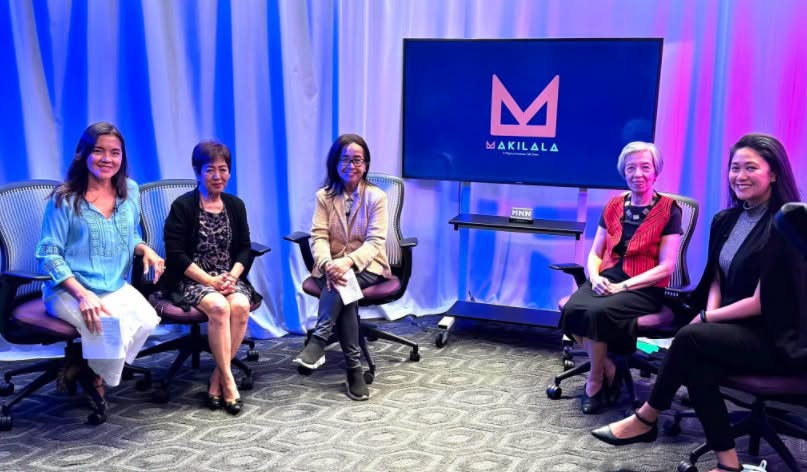
“Taking care of an elderly person is not easy. It is a tough job,” she said. “A caregiver also takes care of the physical and psychological needs.”
She cited as examples older adults who may be dealing with cancer, heart failure, dementia or other serious conditions that make it difficult for them to care for themselves. The caregiver becomes the family the women did not have.
For these Filipino women, the cost of assistance can be daunting.
“It depends on their income. If they have money, they can hire a caregiver,” Ojeda said.
But many of the women Li and Ojeda know are neither poor nor wealthy. They are middle-class immigrants who worked and have modest savings. Stressed Ojeda, “It is challenging to have a caregiver in New York.”
Hiring through an agency can make the cost even more difficult. As she explained, an agency may charge a client significantly more because it must pay the caregiver the required hourly wage. For someone living primarily on Social Security, a pension or retirement savings, round-the-clock care can quickly become financially unsustainable.
The irony is that some of these women do have family.
“They have family in the Philippines, but they are not able to come here,” Li said.
And there is another complication: Some women who have spent decades establishing an independent life in America are reluctant to surrender that independence.
“They don’t want to be cared for. They don’t want to go back to a place they have not been,” Li said.
For some, the Philippines is still home emotionally, but not necessarily logistically. Their lives, possessions, bank accounts, homes and communities are in the United States.
Li described one case involving a retired professional who was showing signs of cognitive decline. The woman was scammed online. Fortunately, her bank detected the problem and stopped the transaction, but it subsequently froze her account. The woman had bills set up for automatic payment — including utilities and internet service — and suddenly found herself unable to manage her finances.
“She was on the verge of Alzheimer’s,” Li said. “She was so worried she would be out on the street, and at the same time she does not trust anyone.”
The experience underscored a problem Li says many older Filipino women are reluctant to confront: “I have been telling them, do a Power of Attorney,” she said.
Yet even highly educated people can resist making such arrangements. Li believes part of the reluctance may be cultural, a fear that preparing legal documents for old age somehow means inviting death or bad luck. “These are educated women,” she said with a shrug.
Caring for someone experiencing memory loss presents an entirely different set of challenges.
Ojeda said caregivers often have to learn not to argue with an elderly person whose perception of reality may be changing.
“That memory problem is hard to take care of,” she said. “You cannot contradict them and they are headstrong. You have to let it go for a while.”
She described situations in which an elderly person becomes suspicious or refuses assistance.
“She will not trust you and you just let it go when they have that ‘sumpong,’” she said, using a Filipino expression for a sudden mood or episode. The caregiver, meanwhile, becomes the person responsible for navigating an increasingly complicated system: banks, doctors, prescriptions, insurance, utilities, and government agencies.
“I always tell them, let’s go to the bank and you have to ask the officer and you have to call your doctor,” Ojeda said. “Everything you have to tell them. But sometimes they are hardheaded.”
Such cases demonstrate that caregiving is not simply about feeding and bathing an elderly person. It can involve becoming a legal, financial and medical advocate — often without knowing exactly what authority one has.
Another concern is what happens when an elderly person dies without having arranged their affairs. Li said some families are surprised to discover how complicated it can become when there are no nearby relatives or designated people to manage an estate.
“If they don’t have [anyone], the government will take their assets,” she said.
In cases where an elderly person eventually needs nursing-home care, Li said assets may be used toward the cost of care depending on the person’s circumstances and eligibility for government assistance.
The larger issue, she said, is that many older immigrants simply do not know what options exist.
“Nobody can organize it for them,” she said.
For Li and Ojeda, the solution begins with information.
“I think it would be good to have a group or a professional that we can consult with,” Li said. “What are the options and what is available?”
Such a resource could bring together lawyers, doctors, social workers and other professionals who understand the needs of aging Filipino immigrants.
“We don’t even know,” she said. “This is all new to us. What are their rights?”
One case illustrated how quickly a crisis can develop.
An acquaintance of Li returned to the Philippines for a vacation, fell and became unable to return to the United States. Her financial affairs in America were suddenly left in limbo.
“The bank stopped the payment for her rent in the U.S.,” Li said. “And I couldn’t find out why because I was not a relative.”
For someone who has lived independently for decades, one accident can expose how few people are authorized to step in.
The problem is not confined to New York, although New York presents particular challenges for older adults who can no longer drive. “This whole generation is getting older,” Li said.
And the support network that once existed is disappearing, too.
“Most of them are alone now because their friends are also elderly and also dying off,” she said.
Li believes the Filipino American community needs to begin talking about aging before a crisis occurs. The problem, however, is that many people do not see themselves as elderly until they suddenly need help.
“Sometimes they don’t know they are aging,” Li said. “They are in denial.”
For a generation that came to America determined to be self-reliant, perhaps the most difficult lesson of aging is that independence does not mean having to do everything alone.
Planning ahead — establishing Powers of Attorney, identifying trusted people, understanding financial and medical options, and discussing long-term care — may be one of the most important ways these women can preserve the very independence they worked so hard to achieve.
