
Why Krizia Daya, RN is joining the picket

By Cristina DC Pastor
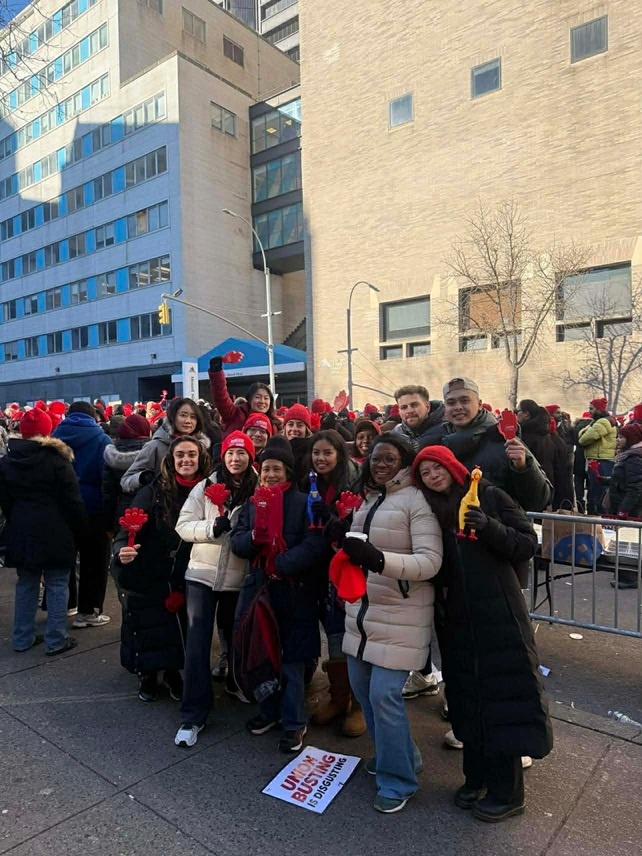
On Day 2 of the nurses strike in New York City, Francine Krizia Daya, a charge nurse at Mount Sinai Hospital, is reflecting on what the picket means to her. Why she is joining her fellow nurses in what is being billed as the “biggest nursing strike in the history of New York City,” what it means to her future, and how far is she willing to hold the line without a contract since December 2025.
Then she remembered an incident at her nursing station. A combative patient was hitting the nurses in her unit and throwing things at them including the call bell. As nurse-in-charge, she called management for guidance on how to deal with a belligerent patient. When the harassment persisted, said Daya, management assigned a security guard outside the patient’s door to provide the nurses a measure of safety while they did their work.
Within 24 hours, the security was pulled out after management decided “it was too expensive,” said Daya, a clinical nurse in the Medical Surgical (med-surg) Telemetry department. She has been employed with Mount Sinai for three years.
“The patient started throwing things at us again,” she said.
Protection from workplace violence is just one of several issues raised when about 15,000 nurses under the New York State Nurses Association (NYSNA) went on strike January 12, 2026. The protesting nurses came mostly from five large private city hospitals including three Mount Sinai hospitals in Manhattan and Montefiore Medical Center in the Bronx.

The other demands – such as “better pay, and safer staffing levels” – are just as serious but to Krizia, workplace violence is her personal grief.
“I pulled my nurses out of there as this was happening,” she said. “When the security walked out I called 911, I called the cops. I wouldn’t hesitate bringing in the cops in when my nurses are threatened.”
This incident brought back to Daya’s memory an active shooter incident at Mount Sinai in East Harlem in November of 2025. Safety measures have not improved since, she asserted.
Daya said the mood in the picket line remains strong and upbeat. Filipino nurses are visible as they take on leadership roles: “They are the ones organizing the marchers, they are the speakers, they are the strike captains, they are holding the lines.” She estimates the protest crowd at more than a thousand.
She said the ideal staffing ratio of one nurse for every five patients – or 1:5 — is not being observed by the hospital. The ratio of 1:9 or 1:10 is what she’s seeing at the place where she works. The staffing ratio refers to the number of patients a nurse can adequately care for at a given time. More than 5 patients means there is a shortage of nurses.
In a statement, the hospitals accused the NYSNA nurses union of “abandoning patients in their time of need.”
“Their decision to walk out on our patients can only be described as reckless,” said management.
Two agency nurses (called scabs or “travelers” by the picketers) are in place in their unit, Daya said. They have been trained by the staff nurses before they went on strike, disputing allegations they left their patients with no care.
“They tried to make us train them. My manager told me to show her around. They’re trying to make us look greedy, we’re not,” she said.
