
Bottle caps for ‘Jingle Bells’
By Gene P. Del Carmen
Joseph could not have been more than 16.
He stood at the front of the church choir loft, towering above us, during our Filipino evening Mass, Simbang Gabi, our novena Christmas tradition that we bring with us wherever we migrate. Robust and earnest, Joseph was a little nervous.
When the first notes of “O Holy Night” rose from his mouth, the church grew very still. His voice was young, untrained and pure. It did not perform the song; it offered it. Something loosened in my chest.
As his voice climbed toward “Fall on your knees,” I was no longer in a New Jersey parish church on a cold December night. I was back in the Philippines, barefoot, breath visible in the early night, my childhood pockets heavy with bottle caps.
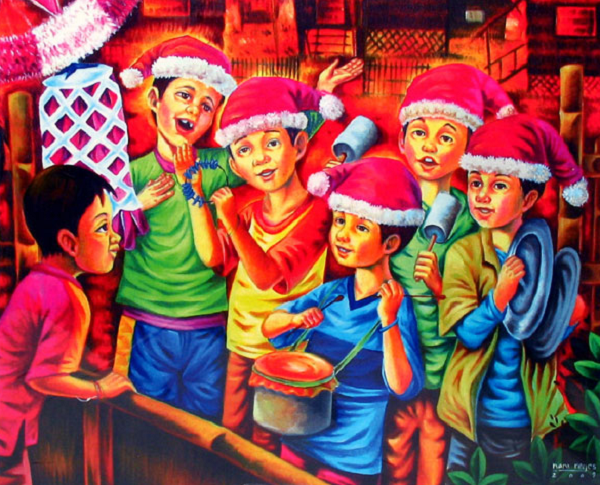
We were poor then. Poor enough that Christmas did not arrive in boxes or envelopes, but in sounds and borrowed light. We had no store-bought tambourines, no bells tied with red ribbons. Instead, we collected discarded bottle caps: Coca-Cola, Royal Tru-Orange, Seven-Up, flattened by hammers, some dull with rust. We punched holes through their centers with nails from our fathers’ toolboxes, then strung them together with twisted metal wire. When shaken, they made a thin, clattering music, not quite bells, but close enough.
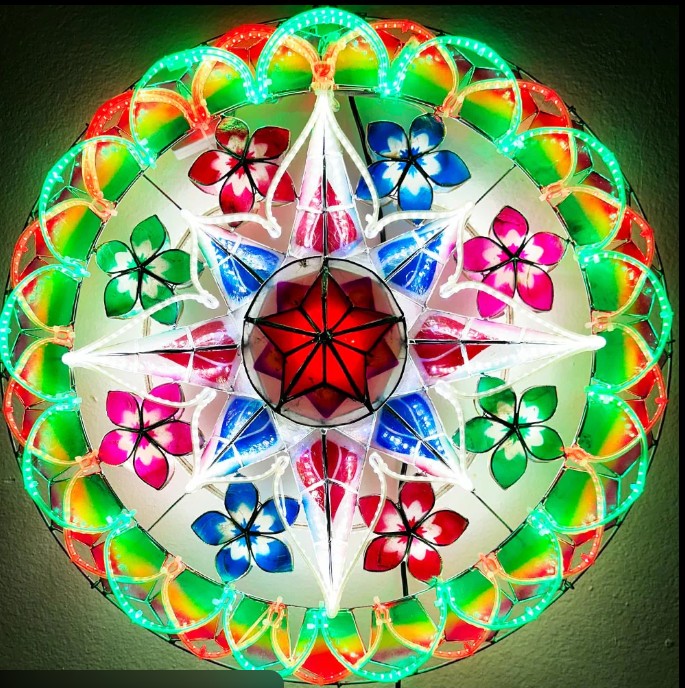
Those bottle caps were our jingle bells.
At night, we went caroling from house to house, our voices bright with hope and slightly off-key. We sang “Ang Pasko Ay Sumapit,” “Sa Maybahay,” and sometimes an English carol, which we barely understood, our accents bending the unfamiliar words. We sang not for applause, but for the ritual of knocking, of being recognized, of being handed a few coins, a piece of candy, or, on lucky nights, a one-peso bill, sometimes with “Suman” wrapped in banana leaves, still warm and fragrant with smoke. The bottle caps rattled in rhythm. To us, they sounded rich.
As Joseph sang on, his voice breaking just slightly on the high notes, I realized that what moved me was not the song itself, but the recognition. He sang with the confidence of youth, unaware that he was already giving a gift that time would one day make priceless.
I wondered if he knew this moment would stay with someone long after the final hymn. If he knew that a man old enough to be his grandfather was silently thanking him for returning a piece of childhood he thought had settled permanently into memory.
When the song ended, the applause was polite, restrained, church-appropriate. Joseph smiled shyly and returned to his seat. But inside me, the bottle caps were still ringing.
I remembered how our hands would sting from shaking the wire too long, how the metal left faint rust stains on our palms. I remembered laughter echoing down dark streets, the smell of candle wax and night air. We did not call it nostalgia then. We called it December.
The Mass continued. Prayers were said in Tagalog and English, familiar words crossing oceans and decades. Yet I carried those bottle caps with me back to my pew, invisible but loud with memory.
Perhaps that is what Christmas truly is, not the perfection of sound, but its sincerity. Not silver bells, but borrowed ones. Not abundance, but presence.
Joseph’s voice reminded me that we were never truly poor. We had songs. We had wire and bottle caps. We had each other.
