
Janet Salazar writes about the real power behind decision-making in debut book
Every one of us has faced a decision we could not make alone. The pivot out of a steady job to chase the thing you actually love. The choice to start a business, or to put your name on a ballot. The morning you had to lay someone off.
We watch bigger versions of the same moment on the news every night, in companies merging into conglomerates or folding altogether, in whole industries reorganizing around a technology that did not exist five years ago, in institutions rewriting rules that took generations to build. The scale changes. What happens right before the decision does not. Somewhere in it, there is a person you turn to, the one who says, here is what I would do.
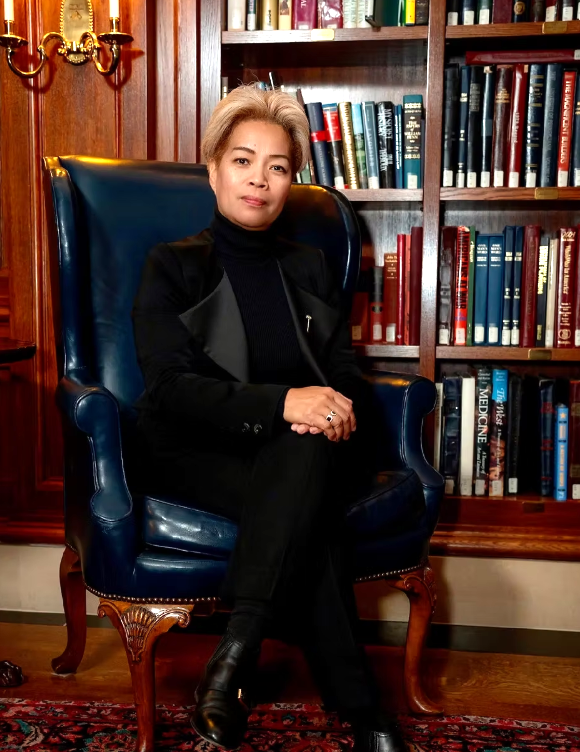
Janet C. Salazar has spent 20 years in those conversations, in boardrooms and at the United Nations and at kitchen tables. In her debut book, she gives the people who have them a name.
“Alpha Whisperers: Power Behind the Power” publishes September 8, 2026 from Riverchild Literary Press. Salazar started writing it in 2023 at the Rockefeller Foundation’s Bellagio Center on Lake Como, and the idea at the center of it is simple enough to say in one line. Power never moves alone.
An Alpha Whisperer is the person who can steady a dominant, brilliant, sometimes volatile personality without bruising the ego. A chief of staff. A spouse. A general counsel. A presidential advisor. A campaign strategist. The aunt everybody calls before the family meeting. Sometimes it’s a consulting firm or a pastor. They don’t run for office and they don’t sit for earnings calls, and most of them have no interest in the credit. But as Salazar writes, they can make or break leaders, start or stop wars, shape morality, and set environmental policy, all through what they whisper. The same person, on a smaller stage, is the reason you took the job or walked away from it.
“Power is rarely where people think it is,” she writes. “It is shaped long before it is seen.”
The timing isn’t subtle. The European Union’s AI Act became fully enforceable this month, and the United Nations held the first session of its Global Dialogue on AI Governance in July, which means the rules for the biggest technology of the century are being written right now by people surrounded by advisers no one elected. Governments are cancelling consulting contracts and asking out loud who has been designing their policy.
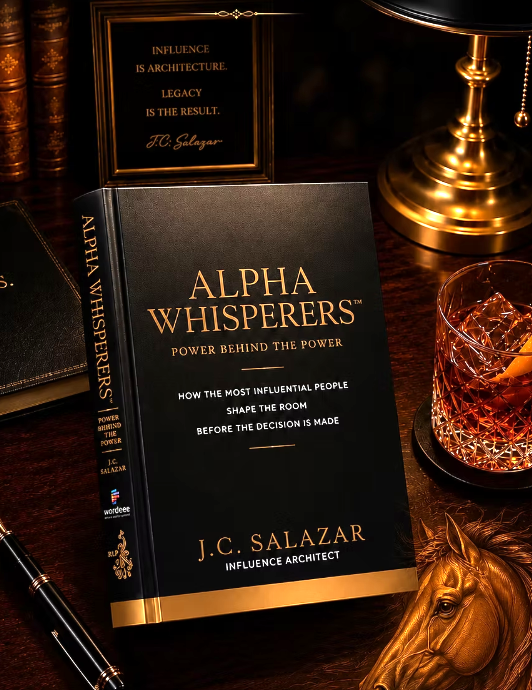
September 8, 2026
Riverchild Literary Press
202 pages
And roughly $124 trillion has started moving from one generation to the next, close to $47 trillion of it to women who will be deciding what that money actually does. Salazar has been in rooms like these for two decades, and she is blunt about what she has seen there.
Her answer isn’t a call for more transparency. It’s a distinction, and it runs through the whole book. Influence leaves a leader’s judgment intact. Control quietly replaces it while keeping up appearances. Which of the two is operating in a given room, Salazar argues, decides whether anyone can still be held to account for what comes out of it. The test works the same way in a cabinet meeting, a boardroom, and a living room.
From there she goes looking for these people. One chapter turns the lens on the global consulting firms, whose influence belongs to an institution rather than a person. Another follows the family members who keep fortunes and legacies alive across generations. Another goes after the history nobody wrote down, the women who changed the course of nations without ever appearing in the picture. Salazar names names, historical and current, and she isn’t always gentle about it.
She isn’t writing about this world from a seat outside it. Born in the Philippines and now lives in the United States, she is the founder and CEO of Alphawin Venture Group, with more than 20 years across business, diplomacy, and leadership, including many years within the United Nations in New York. She coined the term Alpha Whisperer, built the Alphawhisperers leadership engine around it, and teaches a masterclass called The Alphawhisperers Circle for the strategists and advisers who recognize themselves in the book.
She knows the role from the inside, too. Her father died when she was five. Her mother was widowed young with two small children and a big extended family around her, and Salazar says she learned to read faces before she learned to read books. She’ll tell you plainly that she is both an Alpha and a Whisperer. That honesty is what keeps the book from either flattering power or shouting at it.
The closing chapters look ahead a generation, to what leadership might look like if the people advising it were trained and accountable. Then Salazar turns to the reader. If you’re the one who holds the room, whether that room is a cabinet meeting or a kitchen table, if you sense things before other people see them, if you’re the one who gets asked what you think after everyone else has gone home, she has a charge for you. Access is a privilege. She believes it comes with an obligation.
“The next era of leadership is no longer about being the smartest person in the room,” she writes. “It is about building the smartest room.” — Riverchild Literary Press
