
Macario Fojas: Building Seven Seven and championing Filipino talent
By Cristina DC Pastor
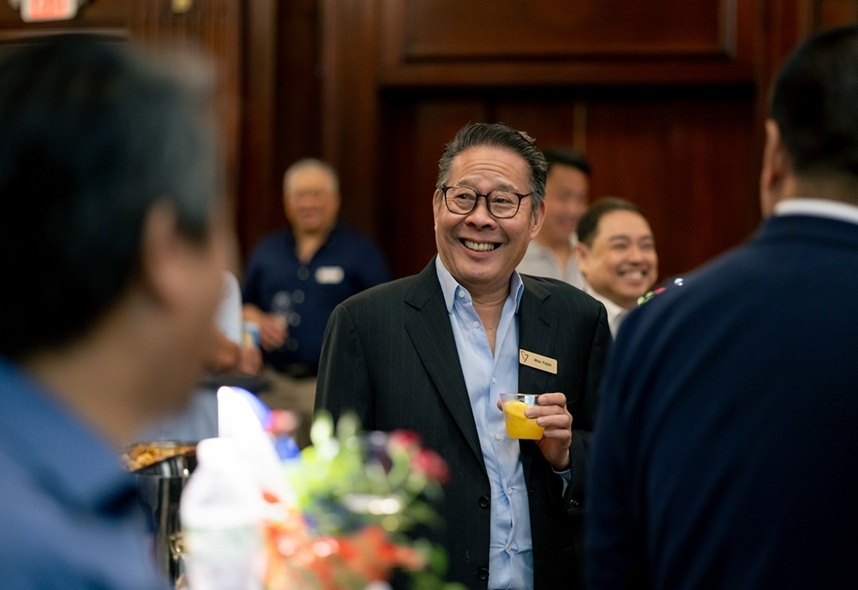
Life was anything but easy for Macario Fojas, president and co-founder of Seven Seven Global Services, Inc., a Filipino-owned IT company based in New Jersey.
In 1982, he was enrolled at Fordham University, pursuing a master’s degree in Finance and Quantitative Methods. By day, he worked as an encoder in New York to support himself. By night, he attended classes from 6 p.m. to 10 p.m., carrying a full academic load.
After long days that blurred into late evenings, he would travel an hour and a half back to Jersey City, where he lived alone. The routine was relentless — work, class, commute — for one year and three months under a trimester system. It remains one of the most difficult periods of his life.
There was barely time to rest, much less reflect. Yet, it was also transformative. He came to believe deeply in the idea that growth is forged through hardship, echoing the sentiment of Nvidia CEO and Founder Jensen Huang, who once said, “I wish upon you ample doses of pain and suffering.” For him, struggle was not a deterrent—it was a teacher.
“You will truly learn when you suffer,” he said momentarily musing in an interview with The FilAm.
It was years later that Fojas, 69, in the hum of an office cafeteria, that a “dream began to take shape,” the seed for what would become Seven Seven was planted amidst a casual conversation with a colleague.
He said, “I outlined a vision to create better lives for Filipinos by providing opportunities for them to take their talents overseas.”
That moment would eventually give rise to a company founded in both entrepreneurial drive and national pride.
The name “Seven Seven,” he admits, carries a personal meaning known only to a close circle. What he shares is simple: seven has always been his favorite number, and the name felt right—perfectly aligned with the company he wanted to build.
Founded in 1996, Seven Seven has since grown into a global IT and knowledge services company with a workforce of thousands. With operations spanning the Philippines, the United States, Singapore, Hong Kong and Australia, the company reflects his long-held ambition: to build the foremost Filipino-owned IT firm on the world stage. At its core, he said Seven Seven helps businesses “transform through technology, bridging strategy with execution using cloud solutions, machine learning, and artificial intelligence.”
Through Seven Seven’s own training academy, the company drills Filipino IT professionals in emerging technologies. While he acknowledges that the most advanced developments in AI are driven by major global players—companies like OpenAI and Google—he believes the playing field is still wide open.
“It’s a wild west out there,” he says. “You have to join the crowd or risk being left behind.” For him, the goal is clear: to ensure that Filipino talent remains competitive, adaptive, and visible in a rapidly evolving industry.

Unconventional childhood
His own story was shaped by an unconventional childhood. Born into a family of four siblings—two brothers, one sister, and himself as the youngest—he was sent at the age of 5, like his siblings before him, to live with their grandfather and grandaunt in Sampaloc, Manila.
The arrangement was to give them the best Jesuit education at Ateneo, far from their hometown of Tanza, Cavite.
It was a life marked by distance from his parents, who would fetch them on Friday nights and return them on Sundays. Summers were spent back in Cavite, but the formative years unfolded largely under the care of their grandfather.
His father, a government lawyer who worked under Finance Minister Cesar Virata, and his mother, a businesswoman who managed multiple businesses that she inherited, provided a strong but distant presence. In that environment, his older brother Edwin stepped in as a father figure. The experience, while unusual, instilled independence and self-courage, qualities that would prove essential during moments of crisis.
The aftermath of the September 11 attacks in 2001 and the global financial downturn of 2008 both dealt heavy blows to Seven Seven. Business slowed, profits declined, and key clients struggled. Yet through perseverance and faith, Fojas steered the company forward.
“God knows we have a good purpose,” he says in reflection.
Recognition for his work has followed. In 2024, he was named Techblazer of the Year at the Asia CEO Awards and received the Technology Entrepreneur of the Year award in the Philippines from Ernst & Young. A year later, he became the first Industrial Engineering graduate to receive a Lifetime Achievement Award from the University of the Philippines College of Engineering Alumni.
Still, he measures success not in accolades, but in impact. For him, the most meaningful moments come when former employees—once trainees under his program—return as successful professionals to say thank you. These are the intangible returns that matter most.

Partner for life
While studying at Fordham, he met his wife, Delle, on a group date. He recalls knowing instantly that she would be his partner for life.
“It may sound weird, but it’s true that I knew she was going to be my wife when I first laid my eyes on her,” he said. “We fell in love and soon got married.”
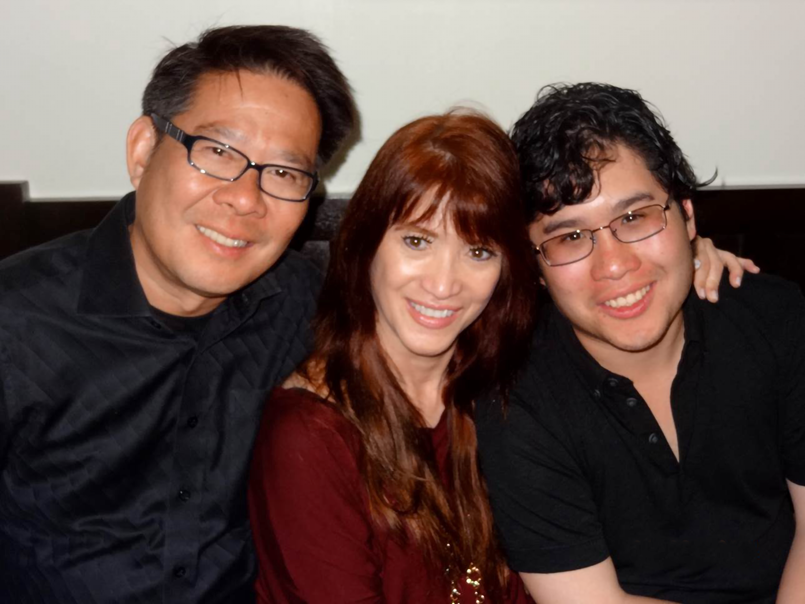
Together, they built both a family and a business in tandem, she leading sales with boldness and confidence, he ensuring operational strength and profitability. Their partnership helped drive growth.
They have one son, Miguel, now 36, who is exploring his own path, including interests in broadcasting. As a father, he has tried to instill the same independence that defined his own upbringing. For him, growth still comes from experience, from trial and error, from finding one’s own way.
Looking ahead, he envisions a successor who shares his grit and purpose, someone unafraid to challenge him, to bring new ideas, and to lead with both courage and discipline. Intelligence, he believes, is essential, but so is the willingness to be tough when necessary.
“I like being surrounded by people smarter than me,” he says. “That’s how we move forward.”
The story of Seven Seven is not just of success, but of purpose, a company sustained by the belief that opportunity, once created, must be shared.
