
Same-sex parenting: Glenn Magpantay on fatherhood without labels
By Cristina DC Pastor
When the U.S.-Senate-appointed Commissioner for Civil Rights Glenn D. Magpantay told his parents that he was adopting a child, they didn’t know how to react.
His mother waited for her husband to say something. When his dad finally spoke, what he said stunned Magpantay: “Well, you’re your own man now, go ahead. Your son will be welcome in the home, but he won’t be my grandson because he is not my blood.”
“I was conflicted,” recalled Magpantay in an interview with The FilAm.
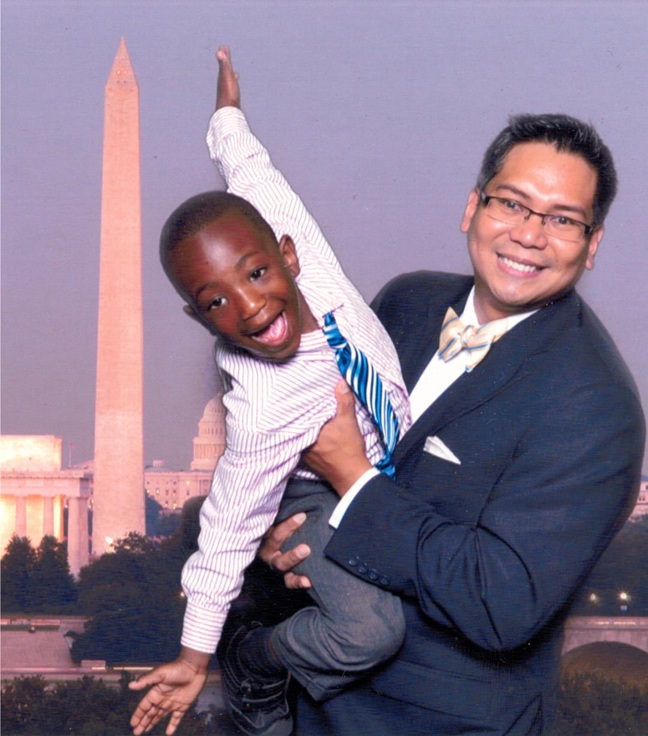
His parents came over to meet his son a few months after that awkward conversation. Magpantay said, “I put my two-week-old son into my dad’s arms. My dad melted and at that instant he had his fifth grandchild. It didn’t matter that he was Black, nor that he was adopted. From then on they treated him exactly like my nieces and nephews. He was family.”
Except that the grandma did not want to be called ‘lola.’
In the end, he said facetiously, parents want only three things of their children: to be rich, not to be alone, and to make them grandparents.
Malcolm Magpantay, is now 19, a college student finding his own path, much like any young adult. He is a student of the private-run Johnson & Wales University in Rhode Island taking up Business. Father and son are close, have traveled together to places like Dubai and Hawaii, visited amusement parks and spent simple days together at the park. But these days, Malcolm prefers time with friends.
“At 19, what teenager really wants to hang out with their dad all the time?” he said amused rather than hurt. “He’s independent—100 percent adolescent.”
Theirs is a story of what today’s family looks like.
Building a family
Malcolm, who is Black, was adopted from a single mother in Philadelphia. Magpantay and his then-husband raised him together until their divorce six years ago. Today, they continue to co-parent.
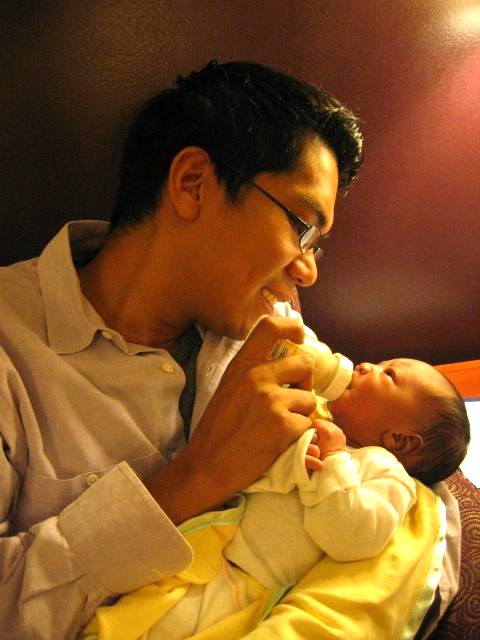
Malcolm calls him “Papa”—a term taken from Magpantay’s Filipino heritage. “Ako ang Papa,” he said simply.
While many assume that being a gay parent brings constant scrutiny, Magpantay said the reality is not like that.
“It’s rarely about being gay,” he explained. “More often, it’s about being a man raising a child.”
He recounted a moment at a flea market when Malcolm, then a young boy, threw a tantrum over a toy firetruck. As Magpantay tried to manage the situation, strangers—mostly women—intervened.
“They assumed I didn’t know what I was doing. They kept asking, ‘Where’s his mother?’” he said. “I told them, ‘I’m his father. I know exactly what he needs.’”
Moments like these, he said, reveal persistent assumptions about gender divisions in parenting—that nurturing is a purely maternal role.
A tale of 2 dads
From preschool onward, Magpantay made it a point to speak up and normalize diverse family structures. At one school event, he introduced his family to other parents: “My child doesn’t have a mom—he has two dads.”
What followed was a chorus of shared experiences. One parent was a single mother with an adopted daughter. Another described a blended family with multiple parental figures.
“In places like New York, families come in all forms—single-parent households, blended families, multigenerational homes,” he said. “We’re not the exception anymore.”
For Malcolm, the concept of having two dads was never a burden. In fact, when he told a classmate about his family structure, the classmate’s response was simple: “That’s so cool.”
When children ask why their family looks different, Magpantay believes honesty and reassurance are important.
“You explain it in a way that makes them feel safe and loved,” he said. “You tell them, ‘You have two dads because you have two people who love you.’” He stated that children often accept these explanations more easily than adults do.
Magpantay acknowledges that society often assigns different strengths to mothers and fathers—nurturing versus discipline, for example. But in his home, those roles weren’t fixed.
“Every parent has to do everything,” he said. “You comfort, you discipline, you guide. There’s no strict division.”
He also noted that raising a child in today’s world comes with its own challenges—from concerns about safety in schools to the pressures young people face.
“The world can be a difficult place,” he said. “You do your best, and you hope they grow into kind, resilient people.”
When he hears celebrities and public figures talk about the joys of same-sex parenting, Magpantay agrees—but with a dose of realism.
“Being a parent is the most rewarding experience of my life,” he says. “And also the most difficult.”
Letting go is part of that difficulty—especially as children grow older and more independent. “You send them off to school, to college, and you just pray they’ll be okay.”
Few role models
When Magpantay became a father, there were few role models—especially for gay men raising children.
“So few of us were doing this 20 years ago,” he said. “I didn’t know anyone else like me.”
Today, that’s changing. More LGBTQ+ families are visible, more accepted, and more supported. Magpantay’s story is a reminder of the quiet courage it took—and still takes—to lead the way.
