
Slovenia in autumn; I rang the church bell three times
By Wendell Gaa
When you hear the country name Slovenia, perhaps the first thought which surfaces, at least in the pop culture mindset, is that of First Lady Melania Trump.
I’ve recently traveled to this nation (the 55th country I’ve visited in my entire life) located in the Balkan region of Europe that was once part of the former Yugoslavia, which dissolved after the end of the Cold War in 1991. To my utter delight, it is a country which is rich in history and natural beauty, and slightly underrated by international standards. This was most evident when I took a day trip from the neighboring country of Croatia together with a small tour group comprising a Portuguese couple and a Lithuanian university student.
Our genial Croatian tour guide met us at a city center point in Zagreb, the lovely capital of Croatia. We then boarded a small van where she drove us for approximately two hours to the Ljubljana, the capital of Slovenia.
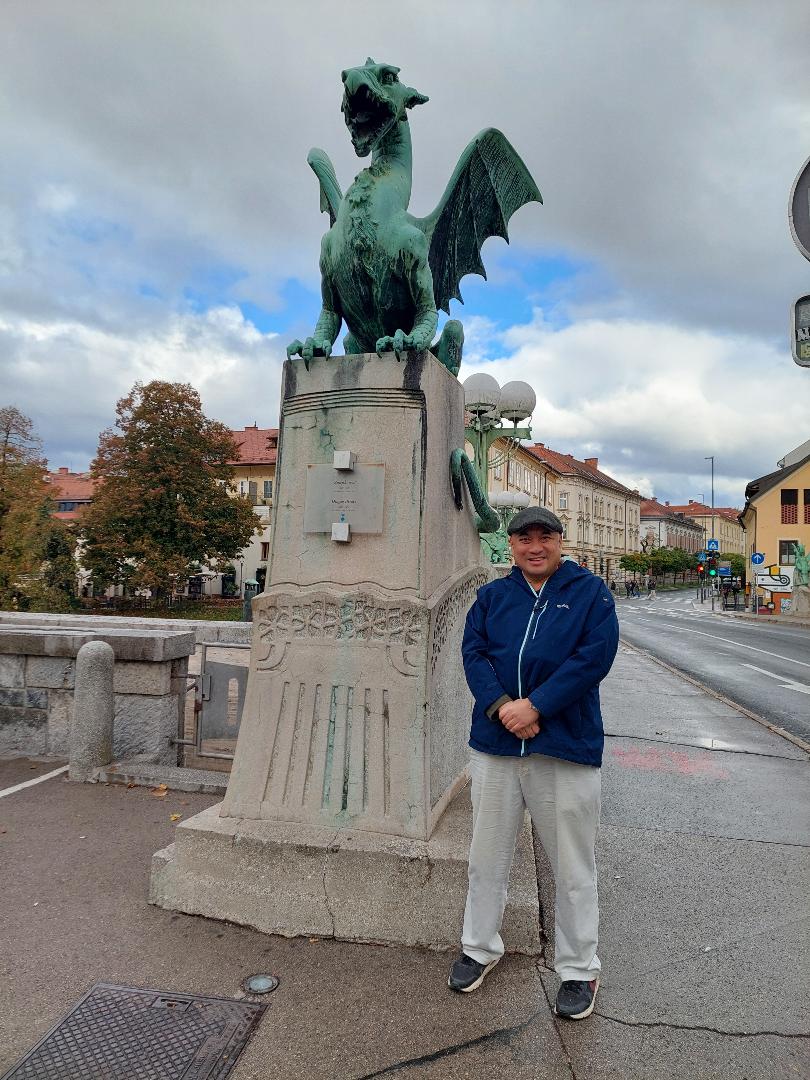
We stopped over at the city center at the famous Dragon Bridge, which as its namesake points out, is adorned on both sides of the bridge with green gothic-looking, and almost gargoyle-like statues of dragons. Interestingly, contrary to many western concepts of dragons being creatures of wrath and terror (ala Game of Thrones-style), our guide had told us that dragons in Slovenia traditionally represent protection, strength and courage. Sure enough I would later purchase two “good luck” dragon statuettes as souvenirs for a couple of my Turkish friends back in Ankara. We looked around the area and saw how the Dragon Bridge, which was first built way back in 1901 when Slovenia was then a part of the Austria-Hungary Empire, overlooks the city’s Ljubljana River and how the place is a popular hangout spot for many students who attend the nearby University of Ljubljana.
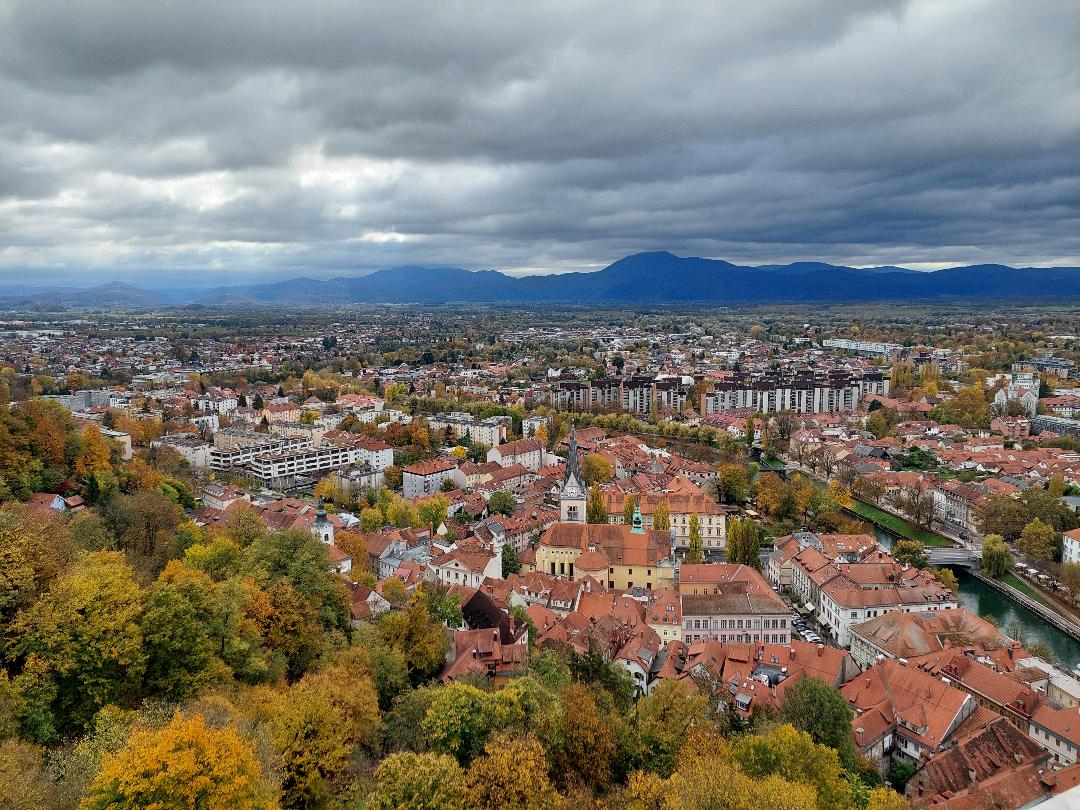
We were then given time to walk around the city center where a cable car took me to this hilltop where the Ljubljana Castle is located. I then walked all the way to the top of the castle’s Viewing Tower where I had a most splendid panoramic view of Ljubljana itself.
It was then time for us to meet our guide where she took us on a roughly 45-minute drive to Lake Bled. As we gazed at the rugged mountain scenery, we were told how 60% of Slovenia actually consists of natural forest reserves, which indicates how mass tourism and development hasn’t quite affected this country in the same way other more well-known destinations in Europe have been.
As our van approached the area where Lake Bled is, we were immediately spellbound by the stunning scenery of the serene-looking lake surrounded by mountains colored with autumn leaves amid the horizon backdrop of cloudy blue skies with an island standing out with its own church, a view which could certainly be taken out of a painting!
We were then dropped off at a lakeside point with a small harbor dock for the local traditional wooden boats known as pletnas. We were led to one of these boats which ferried us to the island with the church. After a 15-minute sail aboard our pletna, which fortunatelyhad an overhead covering which kept us insulated from the cool autumn season breeze, we arrived at the island itself where we were granted some time to look inside the church which was constructed towards the end of the 17th century and is ornamented with the remains of Gothic frescoes dating as far back to the year 1470. What I found most interesting here was having the chance to ring the church bell three times, something which is open for all guests to do.
The moment then came for us to return to our pletna which ferried us back to the lakeside dock where our guide was waiting to drive us to a nearby mountain precipice where the historic Bled Castle is situated. Known as the oldest castle in Slovenia which dates all the way back to medieval times, the scenic bird’s eye view of Lake Bled is just one of the best experiences anyone traveling to Europe can ever have.
