
Sara Duterte will go to jail: Llamas (Part 2)

This is the continuation of The FilAm’s exclusive interview with political commentator and former adviser to President Benigno ‘Noynoy’ Aquino III Ronald Llamas.
Is Marcos a weak leader?
Ronald Llamas is not entirely convinced. He noted that Marcos had allowed Duterte to be arrested, pursued the impeachment of Vice President Sara Duterte, and taken action against his cousin Romualdez, one of the country’s wealthiest congressmen.
“Maybe he’s not as weak as people think,” he said.
He believes Romualdez and other political allies may have felt betrayed, particularly because they might have assumed their political connections would shield them from accountability.
Sara Duterte’s political future
Llamas believes that if she is convicted through impeachment, she would be disqualified from seeking public office. Resignation, however, would not necessarily end the impeachment proceedings. He also expects criminal cases to follow, including possible charges involving plunder, malversation, and grave threats.
Asked whether he sees Sara Duterte going to jail, Llamas said yes, pointing to what he described as documentary evidence, including bank accounts and Anti-Money Laundering Council records.
He also warned that a Duterte return to power could bring retaliation against political opponents.
“They promise to have their revenge,” he said.
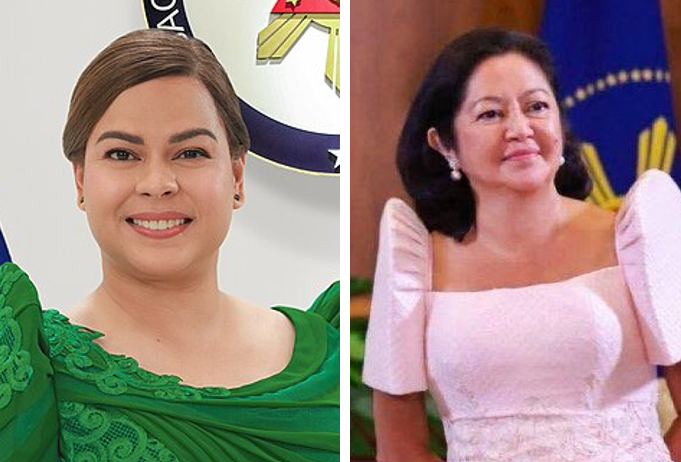
Llamas described Sara Duterte as “unhinged,” a characterization that drew criticism over the use of the adjective to describe a woman politician. He said Senator Leila de Lima and some allies have rejected the gender argument, saying the term applies to men as well.
“Ang tawag ko sa kaniya unhinged. Pero binanatan kaming toxic masculinity. Bakit daw tinawag namin ang babae na unhinged. Sabi ni Leila de Lima it has nothing to do with gender. Even men we call unhinged,” he said in jest.
The growing influence of Liza Araneta Marcos
He noted that the position of Presidential Adviser for Political Affairs, which he previously held, remains vacant. The office traditionally handles political troubleshooting, crisis management, special operations, and political intelligence.
With the absence of a designated political strategist in Malacañang, Llamas believes a vacuum has developed in the administration’s political operations. He sees Vince Dizon and possibly the First Lady as among those filling that space.
Although the extent of her influence is not publicly acknowledged, Llamas believes she may have played a role in selecting some government appointees.
On the departure of Vince Dizon
Llamas offered several possible explanations. Dizon may have been exhausted, he said, but he has not entirely left the Department of Public Works because the person who replaced him was previously associated with him.
“Posible na pagod na siya, kita mo naman, masyado siyang tumanda,” he said.
Another possibility is that the administration wanted someone more independent to handle investigations involving former allies, including Sen. Alan Peter Cayetano, to avoid questions about conflicts of interest.
“Baka sabihin may conflict of interest dahil magkasama sila dati. Baka mas independent yung probe kung ibang tao and nakaupo. That’s more tactically the reason,” he said.
Political dynasties: Is there a solution?
For Llamas, the persistence of political dynasties is among the fundamental reasons the Philippines continues to struggle with poverty, corruption, and impunity.
Despite the constitutional provision against political dynasties, Congress has never passed an implementing law. The result, he said, is that more than 80 percent of elected officials now belong to political families. Dynasties, he argued, control not only national political positions but also local economies, allowing them to consolidate power across generations.
He acknowledges that legislation alone may not solve the problem. Still, he believes an anti-dynasty law must be pursued, possibly through a combination of a reform-minded president and a strong grassroots movement.
He cited the possibility of a progressive president working alongside an energized citizen movement to push Congress into passing the necessary legislation. Political dynasties can be defeated, he maintained, pointing to instances in which established political families have lost elections in their own provinces.
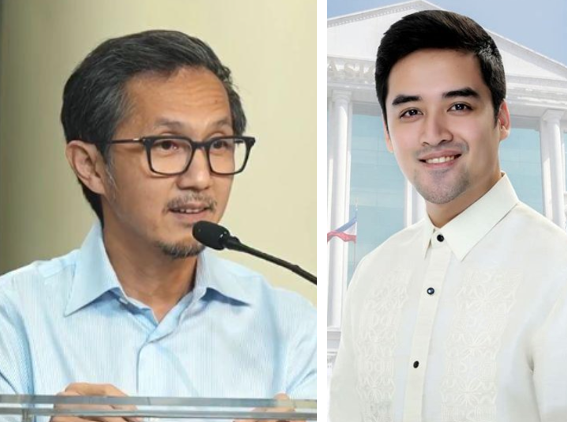
But reform also requires candidates willing to challenge entrenched political families.
“You need more candidates,” he said. “You talk about change, but where are the candidates?”
A possible future for Vico Sotto
Llamas sees Pasig City Mayor Vico Sotto as a potential presidential candidate in the future, although he does not believe Sotto is ready to enter the national race in 2028. He noted that Sotto has shown little interest in joining the Senate and has expressed a preference for executive rather than legislative work.
He also noted how Sotto is averse to joining the Senate while his uncle Vicente ‘Tito’ Sotto remains in the chamber lest they be accused of fostering a political dynasty. He said many believe Vico’s rise to power as Pasig City mayor he charted on his own independent of his uncle’s political influence. Llamas believes Sotto could emerge as a presidential contender in the election cycle after 2028.
Filipino Americans are watching
Llamas said he is struck by how emotionally invested Filipino Americans are toward the country’s political affairs, even after establishing lives thousands of miles away.
“There’s patriotism,” he said. “Even if you’re far away, you cannot help but react when you see a superpower showing aggression.”
As the country moves toward 2028, Llamas believes the convergence of domestic political conflict, corruption investigations, generational change, and geopolitical tensions will make the next elections particularly consequential.
The question is no longer simply which political family will prevail, he said. It is what kind of political system Filipinos want, and whether the electorate, particularly its younger and independent voters, will be prepared to build it.
)