
Ronald Llamas: Philippines faces its most defining political moment since Marcos dictatorship (Part 1)
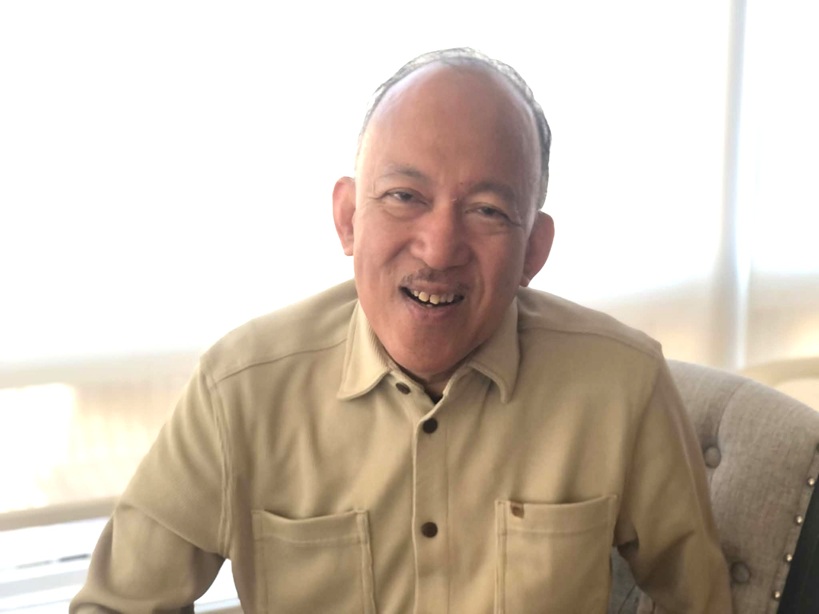
By Cristina DC Pastor
The Philippines is approaching the 2028 national elections amid a political crisis complicated by geopolitical challenges.
The battle is no longer simply between supporters of the Duterte and Marcos camps. It is also about corruption, the weakening of democratic institutions, China’s growing aggression in the West Philippine Sea, and the future direction of the country.
That is the assessment of Ronald Llamas, former political adviser to President Benigno ‘Noynoy’ Aquino III, political commentator and Akbayan party list co-founder. He described the present situation in the country as the “most defining moment in Philippine politics since the Marcos dictatorship.”
Llamas, who began his political activism at 16, was among the student leaders at the University of Santo Tomas who fought the dictatorship. He helped organize the first student council under martial law and later became editor of The Varsitarian. Although he studied journalism, he did not finish his degree.
Today, he sees the country confronting several crises that have converged in an unprecedented manner.
“You came from the Duterte tokhang, then this corruption scandal exploded. Now China’s aggression is escalating,” he said. “All the problems of our society seem to have converged.”
Llamas spoke with The FilAm in his sister’s house in Bergen County, New Jersey before heading to Paris the same day. He has been traveling around Europe and the United States, speaking to Filipinos about the state of Philippine politics and the prospects for the opposition.
Who is the opposition?
With two years before the next national elections, Llamas sees three distinct opposition forces emerging.
There are the Duterte forces, which now find themselves opposing the Marcos administration. There is the so-called ‘pink opposition,’ committed to bringing about change within the constitutional framework. And there are leftist and rightist groups advocating a more radical transformation, including the establishment of a revolutionary government.
Among the latter are retired military officers associated with ANIM, or Alyansa ng Nagkakaisang Mamamayan, who advocate a political reset and have called for the withdrawal of military support for the government. Civil society organizations are also part of this broader movement.
The ‘pink opposition,’ meanwhile, includes supporters of former vice president Leni Robredo, Sen. Bam Aquino, Sen. Kiko Pangilinan, and groups associated with Akbayan, the party-list organization Llamas co-chairs with Sen. Risa Hontiveros.

He believes these different opposition forces are beginning to converge, despite their differences in ideology and strategy.
For Filipinos who reject both Duterte and Marcos, Llamas has another designation: the “third pole.” He estimates this group of “independent and undecided” voters at about 20 percent of the electorate. They may not yet constitute a critical mass, but their influence was already evident in the 2025 midterm elections, he said.
Llamas cited the unexpectedly strong performances of Aquino, Pangilinan, and Akbayan, despite their relatively limited political machinery. Akbayan recorded its highest vote total in the history of the party-list system, while Aquino and Pangilinan secured Senate seats.
He also pointed to former Akbayan chair Heidi Mendoza, whom the group endorsed, receiving almost nine million votes despite lacking the extensive machinery of traditional political candidates.
“From my vantage point, it’s a victory,” he said, attributing the results to independent voters and the youth.
These voters, he believes, will be particularly consequential in 2028. An estimated 60 percent of the electorate will be 40 years old and below, a demographic that has already demonstrated its ability to influence election results.
The China factor
Llamas is particularly concerned about the possibility of Chinese interference in the coming elections.
He pointed to financial transactions involving two institutions associated with the Duterte camp, which he said had received hundreds of millions of pesos. One was a small banana chips business with only two employees that reportedly received P319 million. Another was a foundation that allegedly received P150 million. For Llamas, these discoveries could represent only the beginning of a much larger financial operation.
“There are many ways to bring money into the Philippines,” he said, citing diplomatic channels, the Filipino-Chinese community, and other possible avenues.

He believes such resources could be used to establish political machinery ahead of 2028, hire full-time campaign workers, and finance increasingly expensive social media operations.
TikTok, in particular, has become an influential platform in Philippine political culture.
“Social media is becoming more expensive,” he said. “TikTok ang kultura ng mga Pilipino. And the Chinese own TikTok.”
The concern, he said, is that the country’s already weak institutions are unraveling at a time when corruption, political violence, economic difficulties, and external security threats are all intensifying.
He also cited the peso’s continuing weakness, noting that it had reached around P64 to the dollar and expressing concern that it could depreciate further.
Marcos, Duterte confrontation
Llamas believes Marcos will likely endorse a candidate privately rather than publicly. Given the president’s negative ratings, an open endorsement could prove more damaging than helpful to his candidate, he said. Still, he expects Marcos to do everything possible to prevent the Dutertes from regaining power.
For the Duterte family, he said, the stakes are existential.
“This is not just about their political mortality. Their physical mortality is also at stake,” he said.
Llamas pointed to the record of extrajudicial killings during Rodrigo Duterte’s presidency, as well as threats allegedly made against former Senator Antonio Trillanes and former Senator Leila de Lima. He believes the family’s record in Davao and during the administration’s anti-drug campaign gives reason for concern.
Is Marcos serious about fighting corruption?
Llamas sees Marcos’ anti-corruption campaign, particularly the investigation into alleged irregularities in public works and infrastructure projects, as a significant development.
He believes the president had become fed up with the scale of corruption, although he may have been only partly aware of the extent of the problem.
Llamas pointed to alleged evidence involving former House Speaker Martin Romualdez, more than 10 congressmen, including Zaldy Co, as well as officials in the Department of Public Works and Highways and members of the Senate.
He recalled Marcos’ dramatic declaration during his State of the Nation Address, when the president challenged officials implicated in questionable projects to feel ashamed: “Mahiya naman kayo” was a statement attributed to him.
“We know there is corruption, pero pumutok nang sinabi niyang ‘Mahiya naman kayo.’ In fairness to him nakatulong siya doon. Whether yung kaniyang family (has any involvement) is another thing.”
Llamas suggested that Marcos may not have fully anticipated the political consequences of opening the investigation.
Part 2: Sara Duterte will go to jail; Liza’s growing influence: Llamas
)