
Historical parallels: insurgencies, political dynasties, and corruption scandals Part 2
By Cesar Polvorosa Jr.
Encomienda Legacy
Spanish colonialism implanted deeply unequal class structures across both the Philippines and Latin America. Through systems resembling encomiendas or feudal arrangements, land, wealth, and political power became concentrated in the hands of narrow elites. Over generations, this produced entrenched political dynasties, oligarchic control, regional strongmen, and persistent inequality.
Political scientist Benedict Anderson once described the Philippine system as a “cacique democracy,” where powerful local elites dominate political and economic life. Similar structures emerged across much of Latin America. In both regions, politics often became less about institutions and more about families, personalities, patronage networks, and competing oligarchies. Such conditions also fostered recurring social unrest.
Throughout modern history, both the Philippines and Latin America experienced insurgencies rooted partly in inequality and rural dispossession. The Philippines had the New People’s Army, while Latin America witnessed movements such as Colombia’s FARC, Peru’s Sendero Luminoso, and Mexico’s Zapatistas.
Given these historical parallels in political economy, their economic trajectories unsurprisingly reveal striking similarities. In the decades after the Second World War, the Philippines was among the more advanced economies in Asia. Yet over time, neighboring countries such as South Korea, Taiwan, Singapore, Malaysia, Thailand, Indonesia, and later Vietnam surged ahead.
This mirrored Latin America’s own developmental struggles. During the 1950s and 1960s, several Latin American economies were ahead of East Asia in income levels and industrial development. Yet East Asia eventually overtook them through stronger institutions, industrial policy, export competitiveness, and developmental states. South Korea eventually surpassed major Latin American countries such as Mexico, Brazil, and Argentina in per capita income.
The Philippines, meanwhile, often followed a trajectory more familiar to Latin America: cycles of growth followed by crisis, persistent inequality, corruption scandals, oligarchic concentration, and uneven development. In many cities throughout both regions, gleaming skyscrapers coexist alongside sprawling slums. This reflects the power of path dependency—the way history continues to shape the future in both the Philippines and Latin America.
The Marcos era particularly highlighted these contrasts. While authoritarian governments in parts of East Asia oversaw export-led industrialization and economic transformation, particularly in Singapore and South Korea, the Philippines acquired the unfortunate reputation of being the “Sick Man of Asia.” Political sociologist Peter B. Evans used the concept of “embedded autonomy” to distinguish developmental states from predatory ones. East Asian states often developed strong bureaucratic capacity aligned with national industrial goals, while weaker states became vulnerable to elite capture and rent-seeking.
This does not mean, however, that the Philippines and Latin America are identical. Latin America underwent far deeper demographic transformation under European colonization, including large-scale settlement and the forced importation of African slaves after indigenous populations collapsed from disease and exploitation. The Philippines retained stronger indigenous continuity while simultaneously absorbing influences from China, India, Indonesia, and the broader Malay world.
My inability to communicate with Mexicans in fluent Spanish also reflects another stark difference between the Philippines and Mexico. Spanish became widespread as the primary language of communication in Mexico but not in the Philippines. Unlike Mexico, the Spanish colonizers never intended the Philippines to become a large settler society. They relied on the friars for instruction, who, however, preferred to learn the native languages when teaching the indigenous population. The remoteness of the Philippines from Europe and the fragmented geography of the archipelago likewise contributed to Spanish fluency remaining largely limited to the local elite during the colonial period.
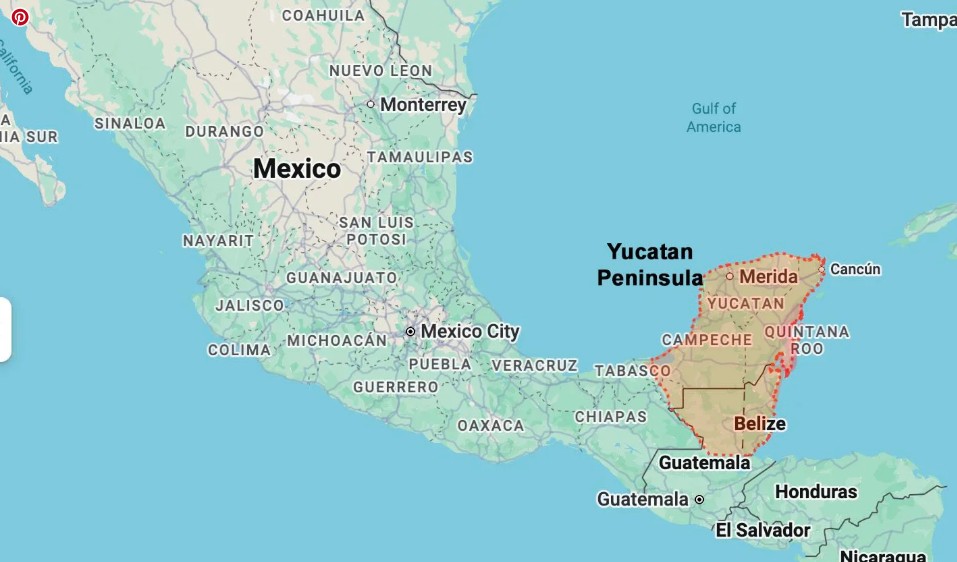
Still, Mexico remains perhaps the closest Latin American parallel to the Philippines. The resemblances are remarkable. Both countries are among the world’s most populous nations, possess vast diasporas, and rely heavily on remittances from overseas workers. In both societies, the United States exerts enormous economic, cultural, and political influence.
Most importantly, Mexico and the Philippines shared more than two and a half centuries of direct colonial linkage under the Viceroyalty of New Spain. The Manila–Acapulco galleons did not merely transport goods. They carried ideas, beliefs, traditions, and social structures across the Pacific.
This forgotten connection helps explain why many Filipinos feel an emotional affinity upon visiting Mexico. The similarities appear not only in churches and fiestas, but also in humor, hospitality, family-centered life, and the resilience of ordinary people confronting inequality and political dysfunction.
A Latin American past — and future?
At the same time, history offers cautionary lessons. The Philippines faces the danger of settling into a developmental path resembling parts of Latin America: moderate economic growth accompanied by persistent inequality, corruption, weak institutions, crime, and recurring governance crises.
Years ago, I wrote that Vietnam was poised to overtake the Philippines economically. At the time, it was largely a projection. Today, it has effectively happened by several important indicators. Vietnam’s rise demonstrates how governance, industrial policy, and long-term strategic direction can transform a nation within a generation. Understanding the foundations of Philippine political economy is therefore essential to discerning the country’s future direction. History does not proceed in a mechanistic fashion. History is not destiny, but it shapes the institutions, class structures, and political cultures nations inherit.
Aspiring to Mexican income levels is a worthy objective. Present-day Mexicans enjoy per capita incomes that are more than three times those of the average Filipino.
Mexico thus offers one possible future scenario for the Philippines, but it also serves as a cautionary example. The country continues to struggle with high levels of inequality, corruption, and crime. Rather than following the trajectory of South Korea—or even Thailand—the Philippines may be tracking more closely toward the Latin American model.
Yet this story is not necessarily one of caution or decline. The Philippine–Mexican connection is also a story of extraordinary cultural richness and historical resilience. Out of centuries of exchange emerged societies capable of blending indigenous, Asian, European, and American influences into vibrant and distinctive national cultures.
For Filipinos today—especially younger generations and members of the diaspora—rediscovering the Philippines’ historical relationship with Mexico broadens the understanding of Filipino identity itself. The Philippines is not only an Asian nation. In many ways, it is also part of a wider Hispanic and Latin American historical world connected across the Pacific.

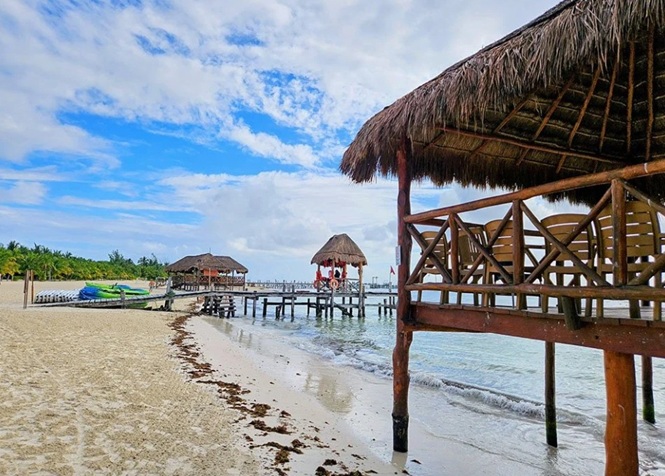
As I stood on that beach in Yucatán celebrating my son’s wedding, I realized that the sense of home I felt was not accidental. Amid the sound of waves in the gathering twilight, it became another moment of self-discovery. History had crossed the Pacific centuries before me. The ocean separating Mexico and the Philippines may be vast, but the cultural memory carried across it remains remarkably close.
And perhaps that is what moved me most. In Mexico, I did not simply discover another country. I encountered a forgotten mirror of the Philippines itself.
Cesar Polvorosa Jr. is a professor of International Business and Economics at a Canadian university. He had been nominated for the Pushcart Prize in Poetry, and both his poetry and short stories have been anthologized in Asian and North American publications. He is an occasional contributor on economic development, globalization and geopolitics to Business World, Interaksyon and PhilStar.
This article was originally published in Positively Filipino.