
Finding the Philippines in Mexico Part 1
By Cesar Polvorosa Jr.
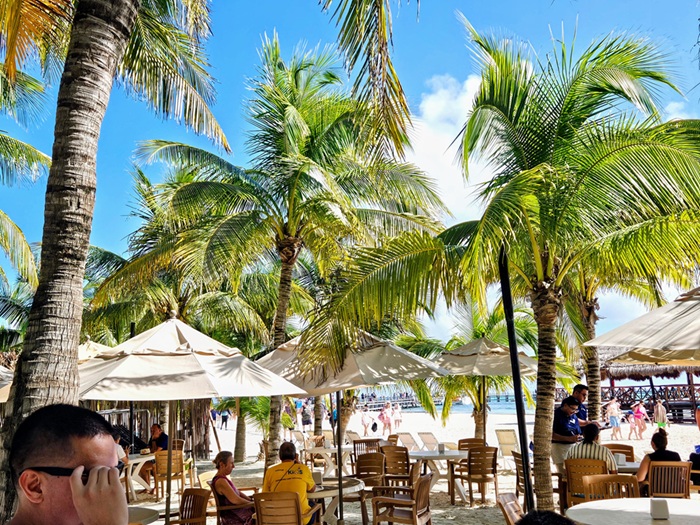
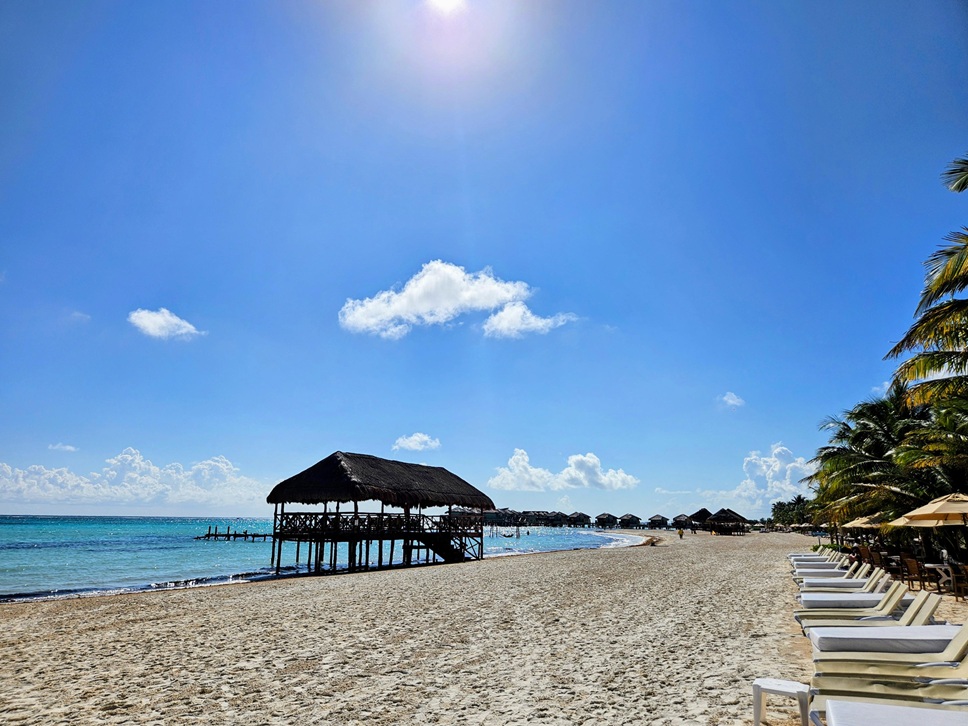
Standing on the sun-warmed shore of the Yucatán Peninsula during my son’s wedding, watching Caribbean waves roll gently onto the Mexican coast, I was struck by an unexpected sense of familiarity. It felt like the comforting embrace of home. The feeling went beyond the tropical sway of coconut palms and the balmy sea breeze. This could have been a beach in Iloilo or Batangas, but it was more than that. The churches, plazas, food, family-centered culture, language, faces, and even the cadence of daily life felt uncannily close to the Philippines. A deep sense of nostalgia washed over me. Thousands of kilometers from Manila, I found echoes of the Philippines everywhere I looked.
I turned and walked back toward the pavilion with a pleasant, expectant air, where my family, our friends, and the bride’s relatives were celebrating. I overheard the Mexican staff and local guests speaking Spanish, and I could follow the gist of their conversations. Though I understood Spanish far better than I could speak it, the body language, humor, and warmth felt instinctively familiar. What I had long encountered in books and historical studies suddenly became tangible and alive. The connection was no longer abstract history. It had entered the realm of lived experience.
Historical connections
What I felt was not merely coincidence or the lingering traces of Spanish colonialism. It was the realization that Mexico and the Philippines were once deeply connected worlds—linked for centuries through trade, religion, migration, and empire. In many ways, the Philippines and Mexico continue to share historical experiences, cultural instincts, and even social realities that remain visible today.
For many Filipinos, Mexico remains a distant country associated with mariachi music, tacos, and colorful fiestas. Yet historically, Mexico may be one of the most important foreign influences in the shaping of Filipino identity. Long before modern globalization, before airplanes and the internet, the Manila–Acapulco galleon trade connected the Philippines to New Spain—colonial Mexico—for 250 years, from 1565 to 1815. During this period, Manila and Acapulco were not peripheral outposts but twin gateways of a trans-Pacific world that carried silver, spices, textiles, culture, porcelain, and ideas across oceans.
The Philippines was governed not directly from Madrid for much of the Spanish colonial period but through the Viceroyalty of New Spain in Mexico City. Mexican soldiers, priests, merchants, and administrators arrived in the islands, while Filipinos traveled to Mexico aboard the galleons. Cultural exchanges flowed continuously across the Pacific. This helps explain why many Filipino traditions often feel closer to Latin America than to East Asia.
The similarities remain striking even today. Deep Catholic religiosity, elaborate town fiestas, extended family structures, emotional warmth, popular devotions, and even aspects of language and cuisine reveal shared historical experiences. Filipino dishes such as tamales and arroz caldo reflect culinary influences transmitted through the galleon trade.
Words in Philippine languages trace their roots not only to Spanish but also to Nahuatl, such as tiyangge (street market), as well as to Mexican Spanish. The baroque churches that dominate many Philippine towns strongly resemble churches across Latin America. Instead of the towering pagodas and temples commonly associated with Asia, the Philippine landscape often features soaring church steeples.
Similar passions: The three Bs
The similarities are not merely historical abstractions; they also appear in everyday popular culture. I smiled when resort staff repeatedly exclaimed “Pacquiao!” after discovering my Filipino roots and learning that I could converse in some Spanish. It was another reminder that I should have taken my Spanish courses at U.P. more seriously decades ago.
Indeed, Mexicans and Filipinos share a surprising affection for what some jokingly call the “three Bs”: boxing, beauty pageants, and billiards.
While soccer overwhelmingly dominates Mexican sports culture, basketball also enjoys enormous popularity—another convergence of interests with Filipinos.
The historian Arnold J. Toynbee is often credited with observing that “the Philippines is a Latin American country transported to the Orient by a giant marine wave.” Historians have struggled to verify the original source of the quotation, and it may well be apocryphal. Yet, authentic or not, the line captures an important truth: the Philippines possesses a unique historical and cultural affinity with Latin America that distinguishes it from much of East and Southeast Asia.
There is even an old saying that “Filipinos think like Americans, feel like Spaniards, and act like Malays.” Though simplistic, it reflects the Philippines’ layered historical identity. Spanish colonialism, American influence, and Asian roots combined to produce a society unlike any other in Asia. This cultural hybridity often becomes the invisible bridge that allows Filipinos and Latin Americans to connect with unusual ease.

Yet the ties between Mexico and the Philippines extend beyond food, religion, and shared sentimentality. They also shaped social structures and political institutions whose effects continue to influence both societies today.
Cesar Polvorosa Jr. is a professor of International Business and Economics at a Canadian university. He had been nominated for the Pushcart Prize in Poetry, and both his poetry and short stories have been anthologized in Asian and North American publications. He is an occasional contributor on economic development, globalization and geopolitics to Business World, Interaksyon and PhilStar.
This article was originally published in Positively Filipino.
NEXT: The rise of political dynasties