
Immigrant domestic workers are being recorded on the job (Part 1)
By Narimes Parakul
This story comes to us from Feet in 2 Worlds, an independent media outlet and journalism training program that empowers the voices of immigrant journalists.
It is part of Surveilled and Sold, an investigative series from Feet in 2 Worlds about how surveillance technologies track immigrants in an era of mass deportation — and the ways private companies and the U.S. government buy, sell, and exchange our personal data.
Felicia, a 51-year-old nanny, is certain she’s being secretly recorded.
When she returns to her employers’ New York home after a trip around town with their toddler, the parents bring up something she spoke about while at the playground. And when she takes another family’s preschooler to a playdate on a different day, these same concerns remain. The other parents also bring up something she talked about earlier.
“Sometimes it happens right as you get in [to the home],” says Felicia. “So it’s not like a child will have enough time to go and say something to the parents.” She’s not alone in her suspicions.
“When I speak about it, surprisingly, there are so many nannies that have experienced the same,” says Felicia. “This has been something that’s very common now. We know what’s going on.”
An immigrant from Saint Lucia, Felicia came to the United States over 20 years ago. Two years after settling into life in the U.S., Felicia’s cousin, also a nanny, suggested Felicia try her hand at nannying — and began recommending her to different families. She has worked as a nanny for families in New York and New Jersey.
In 2020, she became certified as a newborn care specialist, helping new parents navigate infant care. Felicia’s mother, who’s in the same profession, recommended the specialization.
Felicia is still in touch with the first families that hired her. She took care of one family’s triplets and another’s twins when they were just toddlers; those kids are now in college.
In recent years, Felicia has had to hone a new skill: how to spot when she’s being watched. “The cameras are basically everywhere,” she says. “I can walk into a room and I can tell you about certain cameras.”
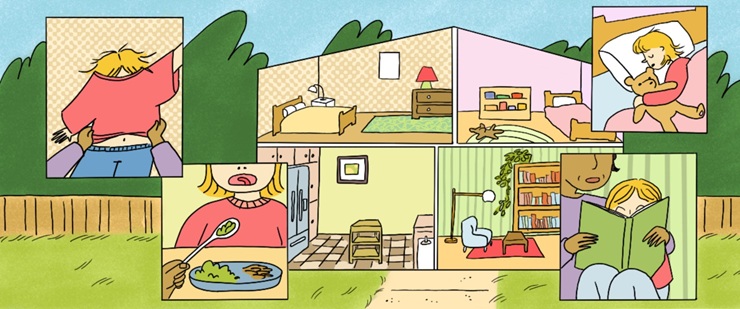
It’s common to find them in living rooms, kitchens, and play areas of her employers’ homes, Felicia says. She’s discovered cameras in wine toppers, pens, and Christmas ornaments. She even found one in the bathroom of a home in Brooklyn, New York.
“It makes me feel like [they] don’t trust me,” Felicia says. She thinks cameras are unnecessary for most parents, especially ones that work from home in the next room or just down the hall. “If you don’t trust a nanny, you should not have a nanny work with you.”
Privacy concerns in the workplace
As a nanny, Felicia falls under the umbrella of domestic workers — a broad group that also includes house cleaners, home health aides, and caregivers. For these workers, tolerating increased surveillance in the workplace is becoming increasingly familiar. About half of U.S. households have at least one security camera inside the home, according to 2025 data. About 75% of U.S. parents use nanny cams. Many install them for “peace of mind,” using them to monitor pets or children, or to record potential break-ins.
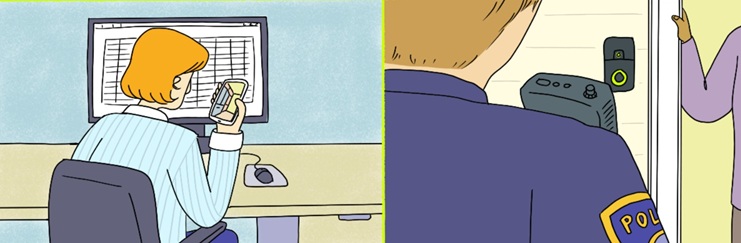
For some, tools like Ring cameras — one of the most popular smart-home brands — help them feel more in control of their home and property. But for domestic workers, Ring cameras are a constant observer in their employers’ homes, scanning their faces and recording their words and actions.
Domestic work is disproportionately done by Black and brown immigrant women like Felicia. Immigrant domestic workers are subjected to surveillance by both federal immigration agencies and local governments.
Under federal and state laws, those working in sensitive positions, like caring for children and the elderly, must provide their fingerprints — often to private companies contracted with state or local law enforcement agencies. Those companies can share these fingerprints with federal immigration agencies. According to the American Immigration Council, a nonprofit promoting immigrants’ rights, states are also required to share immigrants’ biometric data with the Department of Homeland Security (DHS).
Jennifer Lynch is General Counsel with the Electronic Frontier Foundation (EFF), a nonprofit organization advocating for data privacy.
“Sharing fingerprint data with DHS] is subjecting undocumented and even documented immigrants in the United States to heightened fears of deportation should they have any interaction with law enforcement,” she writes in a report with the American Immigration Council.
Narimes Parakul is the 2025-2026 Reporting Fellow at Feet in 2 Worlds and an award-winning investigative journalist based in the Pacific Northwest. Most recently, she was Business Insider’s first staff researcher and fact-checker on the investigations team. Her work on longform investigative projects include reporting on the environmental and financial consequences of data centers across the U.S., contributing to the first reporting dataset of transgender homicides over a five-year span, and building a reporting database exposing sexual abuse cover-ups among secondary school teachers in the largest school districts in the country. Using enterprising public records, her quicker turnaround investigative stories covered patterns of abuse, inhumane conditions, and wrongful deaths in the correctional and psychiatric care industries.
Part 2: Advocating for legal protections for domestic workers
)