
Malaya Sol debuts album, cookbook at the same time: ‘Both preserve memories, communicate identity’

For Filipino vocalist, composer and bandleader Malaya Sol, music has never been a straight path. It has taken her from church choirs in Zambales to jazz lounges in Manila, from samba circles in Macau to the music clubs of New York City. Along the way, she has gathered influences, friendships and experiences that now find expression in her debut album, Madura.
Released digitally on November 11, the eight-track album is the product of two summers of work and years of musical exploration. Its title, which means “ripe” or “at its prime,” reflects Sol’s belief that some things cannot be rushed, including the moment an artist is ready to share her work with the world.
Now in her mid-thirties, Sol sees the album not as a summary of her career but as a collection of songs that speak to who she is today.
“I’ve written many songs over the years, but these are the ones I chose for my first record. I don’t believe an album should be forced. It takes time for the songs to find their place, and for me to articulate what I want to say through them,” she said when interviewed by The FilAm.
Sol composed six of the album’s eight tracks. The remaining pieces include “O Jardim,” with music by flutist Itai Kriss and lyrics by Sol, and two interpretations: “Alice in Wonderland,” written by Emma Wallace, and “Sem Você,” by Brazilian songwriting legends Antonio Carlos Jobim and Vinicius de Moraes. The album moves through Brazilian musical traditions. Its arrangements bring together guitar, strings, bass, drums, percussion and horns.
One of the songs, “Coração Ao Mar,” grew out of a personal experience in the Pacific. She recalls jumping from a boat into deep water and imagining what it would mean to cast her heart into the sea, surrendering the need to control where life might take her.
But to understand the music on Madura, one has to go back to the Philippines, where Sol’s musical education began.
Born and raised in Zambales, Sol is the second of five children. She attended Olongapo City National High School, where she joined the Special Program in the Arts of Region III, majoring in Vocal Music and minoring in Theater Arts.
She also sang with the Olongapo Youth Choir, eventually becoming a featured soloist. Under the guidance of Maestra Jenivee Tolentino, she developed her vocal abilities and experienced performing on international stages as the choir represented the city at the World Choir Games and Asian Choir Games.
Her musical roots go even further back.
As a child, she sang psalms during early Sunday Masses and grew up listening to Kundiman, a traditional Filipino musical form that was particularly cherished by her grandfather, Vicente.Those early experiences would become elements of her musical identity.
Like many Filipino children, however, Sol was encouraged by her family to pursue nursing. She enrolled at Our Lady of Fatima University in Manila to study in the medical field. But her weekends had a different agenda.
While her family expected her to follow a conventional career path, she quietly pursued music, performing at jazz lounges in hotels around Manila.
Eventually, music took her overseas to Macau, where she began working as a full-time musician.
It was there that she discovered another musical world. Sharing a home with Brazilian roommates introduced her to samba and the wider Brazilian music scene. She fell in love not only with the rhythms but also with the culture and community surrounding them. When her Macau chapter ended, Sol moved to New York City in 2013 and began rebuilding her life and career.
“It wasn’t easy. I knew almost nobody and had no established community to lean on,” she recalled.
She attended jam sessions, met musicians and searched for collaborators, sometimes through Craigslist postings. She first settled in Hoboken, New Jersey, before moving to Brooklyn in 2017, where she found a larger community of musicians and more opportunities to explore her interests.
Over time, she developed a musical language that brought together jazz, Filipino Kundiman and Brazilian music.
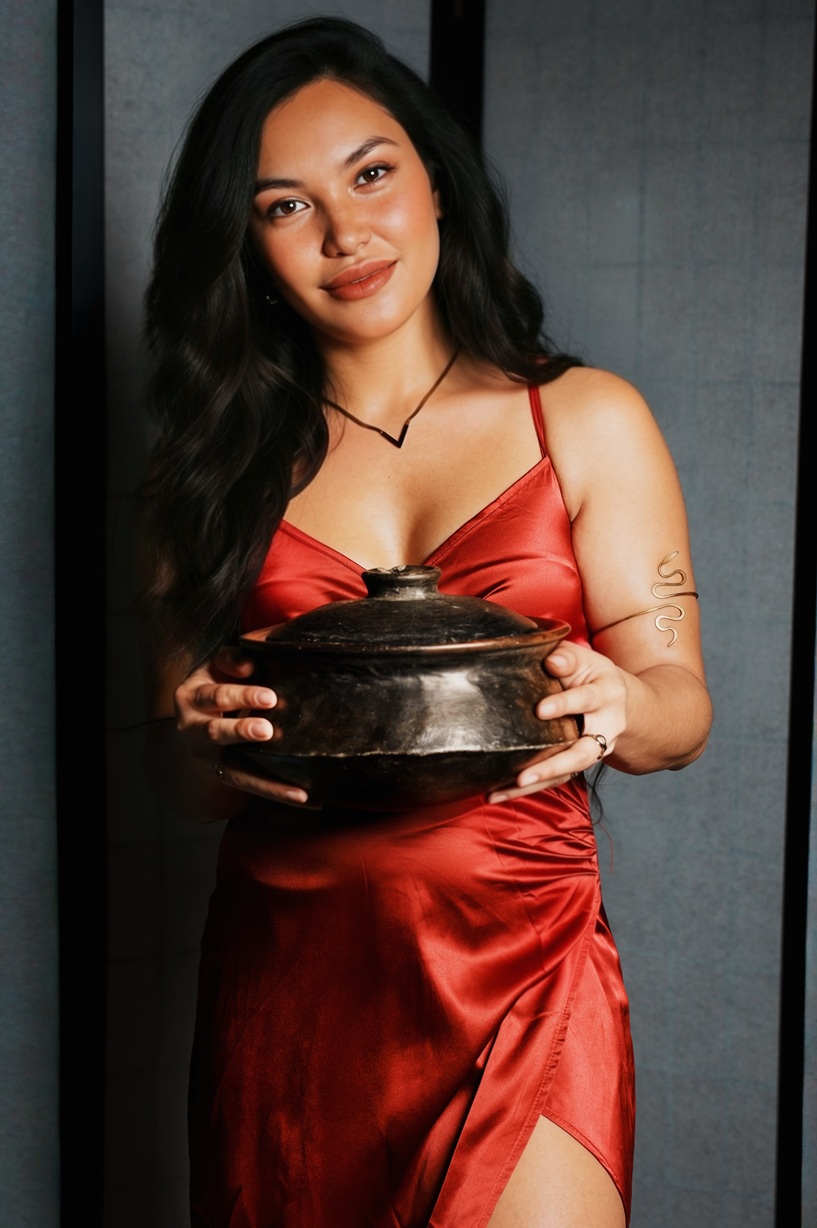
Today, Sol performs 1920s jazz every Friday with the resident Red Pavilion Jazz Band at Red Pavilion, an Asian Neo-Noir jazz club in Brooklyn. She also performs at LunÀtico, a music venue in Bedford-Stuyvesant known for its international lineup, where she can share her Filipino musical roots alongside her affection for Brazilian music. Another regular performance venue is Django at the Roxy in Tribeca.
For Sol, releasing a debut album in her mid-thirties comes with a little self-consciousness. But she has also come to appreciate why it took this long.
She acknowledges a lingering insecurity about releasing her first record at an age when some musicians have already produced several albums. Yet she recognizes that the person she is today could not have made Madura a decade ago.
“Perhaps this album is a kind of harvest,” she said. “These are the fruits of everything I’ve gathered, grown through, and carried with me. And I’m finally ready to share them.”
Alongside Madura, Sol has released DRTY KTCHN, her first cookbook, a collection of 12 recipes that she describes as a memoir told through food.
Cooking, she explained, has been part of her life since childhood. She grew up watching her parents in the kitchen, fascinated by the preparation of meals and the activity surrounding food. As she got older, she helped raise her younger sisters and naturally took on the responsibility of cooking for them.
Food became one of her ways of expressing affection and caring for others.
When she moved away from home, she carried that habit with her. Wherever she settled, she found pleasure in preparing meals and sharing them with friends and her growing musical community.
In Brooklyn, her home has become a gathering place for rehearsals, often accompanied by a Filipino feast. She also hosts annual summer and winter gatherings where cooking for a crowd has become a tradition.
Friends have repeatedly encouraged her to open a restaurant, impressed by her cooking and the meals she prepares for them. But Sol is not quite ready to turn her passion into a business.
“I don’t think I have the nerve to take on the responsibilities and liabilities of operating a food business!” she said with a laugh. She would rather cook because she loves it, without the pressures of running a restaurant.
Still, the requests for her recipes kept coming. Eventually, she decided to put together a dozen of them, each carrying a piece of her personal history, Filipino upbringing and memories of the people she has fed.
For Sol, music and food serve similar purposes. Both preserve memories, communicate identity and create connections between people. One happens around a microphone, the other around a dining table, but both invite people to come together. The cookbook became a natural companion to the album. — Cristina DC Pastor
