
Claro de los Reyes brings Filipino history in Brooklyn to life
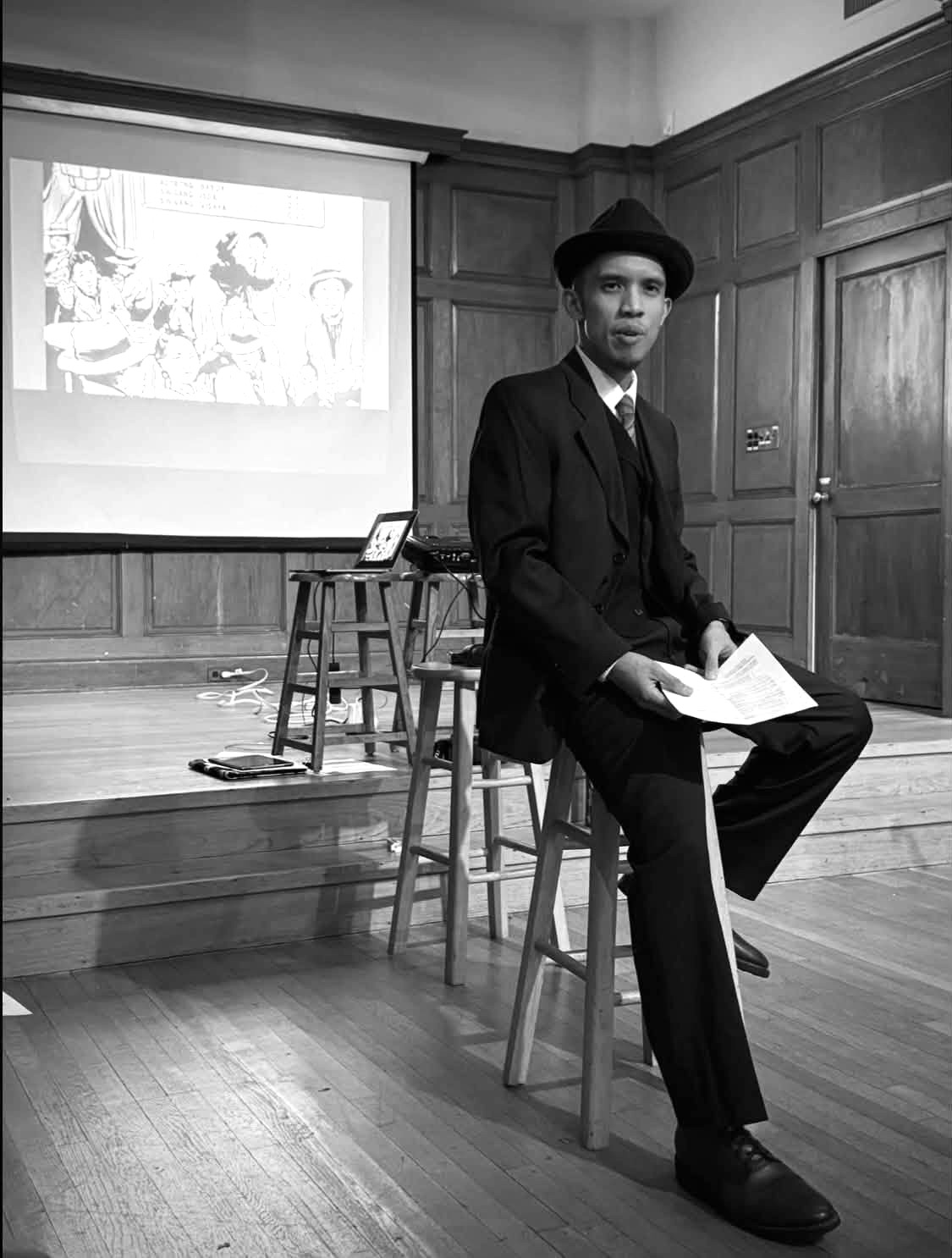
By Cristina DC Pastor
For Claro de los Reyes, history is not confined to museums, academic journals or the pages of textbooks. It lives in the stories people tell, the neighborhoods they inhabit and the memories they carry across generations.
A Brooklyn resident for nearly two decades, de los Reyes is exploring the Filipino American experience through an approach that brings together art, oral history, public programs and community storytelling.
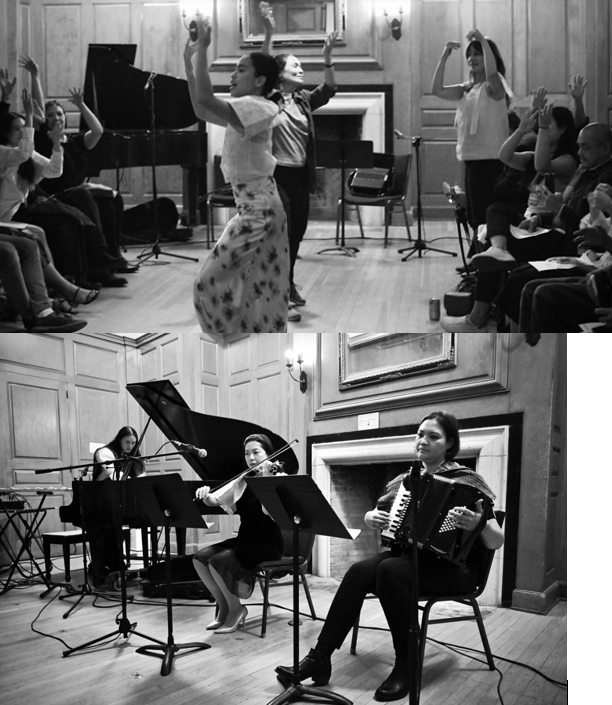
His latest undertaking, Brooklyn Karihan, invited Filipinos and their neighbors to gather for an evening of music, performance and personal narratives celebrating the community’s history in Brooklyn.
The event, part of his Baryo Brooklyn public history project, revisited a largely forgotten chapter of Filipino life in New York: the presence of Filipinos in Brooklyn nearly a century ago.
The name itself carries a historical reference.
“Karihan” is a Filipino term associated with a carinderia, a small eatery. For de los Reyes, it evokes the Manila Karihan, a Filipino gathering place in Brooklyn in the 1930s, near the Brooklyn Navy Yard.
The restaurant was more than a place to eat. It represented a social space where Filipinos could meet, exchange stories and find a sense of community far from home.
“There would have been the beginnings of a Filipino-town or Little Manila in Brooklyn 100 years ago,” de los Reyes said in an interview with The FilAm.
The Brooklyn Karihan gathering was designed as a living history social event, bringing together people whose experiences reflect the many layers of Filipino life in the borough.
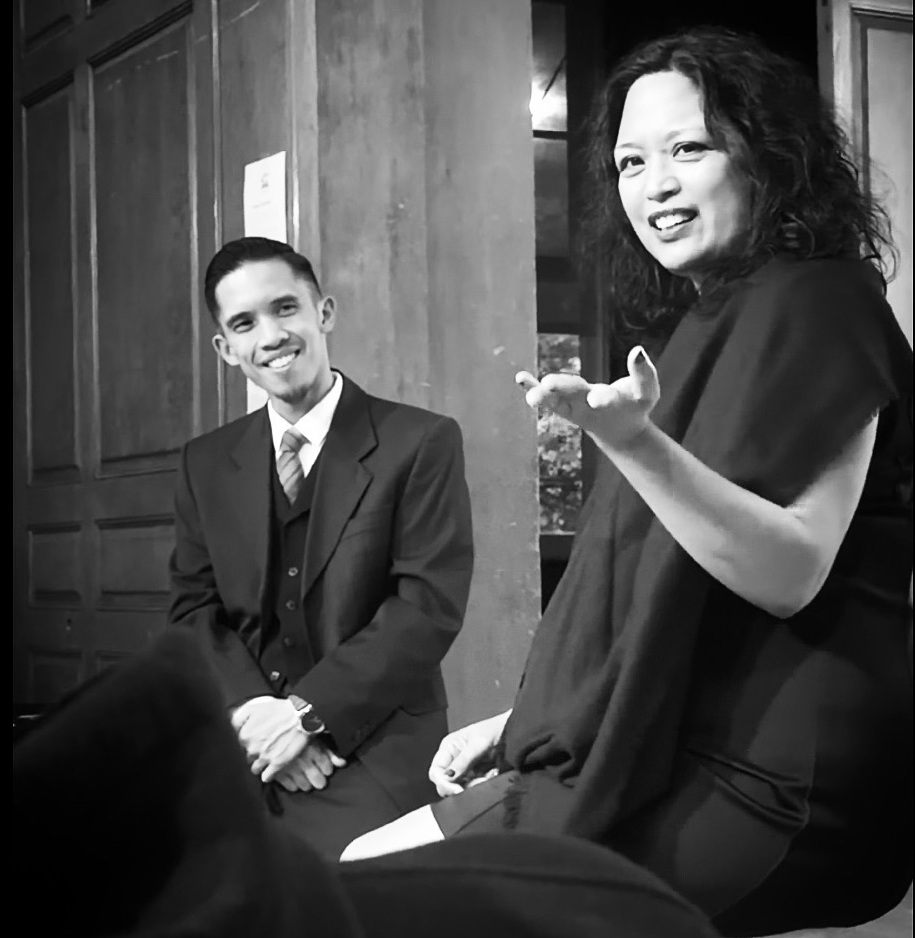
About 80 people attended the intimate gathering, where storytellers shared their experiences of living in different Brooklyn neighborhoods over several decades. The program also featured musicians and performers, creating an evening that connected history with the arts. Among those who shared their stories were Caroline C. Pasion, Lydia Gaston, Michael Salgarolo, Rocco Cetera, and RJ Kaleohano Nadal.
For de los Reyes, the value of the event was not measured simply by attendance. It was about listening.
“Live listening is a lost art,” he said, describing storytelling as one of the earliest ways people have preserved history.
De los Reyes is the founder of Baryo Brooklyn, a project that examines Filipino American history through a distinctly local lens. The project is related to “My Baryo, My Borough,” an oral history initiative that sought to document Filipino experiences in Queens some 10 years ago. Both projects share a common interest in exploring how people make a place their own.
“I’m really interested in the local texture of an experience,” he said. “A lot of times, we talk about the Filipino and Filipino American experience in broad strokes. I’m interested, as a person and as an artist, in what makes that experience unique.”
Rather than focusing exclusively on major historical figures or landmark events, he is interested in the ordinary people who built communities, worked in neighborhood businesses and left traces of their lives in the places they inhabited. He points to the presence of Filipino barbershops, restaurants and video stores as examples of the everyday landmarks that shaped community life.
An establishment like Elvie’s Turo-Turo in the East Village, for instance, or a video store in Jersey City where people could find Dolphy movies, might not appear in a conventional history book. Yet these places represent important pieces of Filipino American memory.
“They’re monuments,” he said, referring to these neighborhood establishments and the memories associated with them.
Their disappearance, often through displacement and gentrification, makes documenting them even more urgent.
De los Reyes has lived in Brooklyn for nearly 20 years and has seen how neighborhoods change. He believes that recording the experiences of longtime residents is a way of honoring their presence and recognizing their contributions.
Filipino Brooklyn before World War II
One of the most compelling aspects of Baryo Brooklyn is its focus on Filipino life before World War II.
The history of Filipinos in New York is often associated with the wave of immigration following the 1965 Immigration and Nationality Act. But Filipinos were already living and working in Brooklyn in the 1920s and 1930s.
At the time, the Philippines was still under American rule. Under the Treaty of Paris of 1898, the United States acquired the Philippines from Spain. Filipinos became American nationals, though they were not American citizens. The country gained Commonwealth status in 1935 and independence in 1946.
Many early Filipino immigrants in Brooklyn worked in maritime industries, including as merchant mariners. Their proximity to the Brooklyn Navy Yard made the borough an important location for understanding this early migration.
De los Reyes is examining how these workers lived, where they gathered and how they established relationships with other communities.
He is also interested in the connections between Filipinos and the histories of other communities, such as African Americans or Latinos.
His short film, “Sands Street,” explores a fictional relationship between a Filipino merchant mariner and a Black woman. The film is not based on a true story, but it draws from the historical realities of communities living alongside one another.
The story reflects de los Reyes’ interest in finding shared histories that can bring different communities into conversation.
He has also explored the history of Buffalo soldiers who participated in the American occupation of the Philippines, an episode that raises questions about the intersection of African American and Filipino American experiences.
For him, history becomes more meaningful when it invites people beyond the community being studied.
A public historian by practice
De los Reyes describes himself as an artist first, though history has become an essential part of his creative practice.
“I’m a public historian,” he said, explaining that his work involves sharing history with the public through creative and engaging methods.
He has some informal training in history, but his work is not limited to scholarly research. Instead, he seeks to translate historical material into experiences that people can connect with.
“There is so much scholarship and so many works of art that haven’t really reached the broader audience,” he said.
His goal is to bring those histories to the Filipino community and to the wider public, including neighbors who may not know much about Filipino American life.
The work is supported through grants and partnerships, including the Brooklyn Arts Council and the Laundromat Project.
De los Reyes came to the United States as a boy and grew up across the country. He has made NYC his adopted home, developed an artistic practice that draws from his own experiences.
He often works wearing multiple hats as researcher, artist, organizer and educator. He also teaches oral history, a practice that informs his approach to collecting and interpreting community memories. He is mindful of the challenges of producing public programs, particularly when it comes to reaching audiences and keeping events accessible.
His work is ongoing, and he is still discovering new people and new stories. For de los Reyes, Brooklyn Karihan was not simply an event about the past. It is a history of people who worked, gathered, raised families and made homes in a city that continues to change. And in telling their stories, he hopes to ensure that the people who helped shape Brooklyn are not forgotten.
