
Breast cancer survivors find strength, healing through paddling
By Lindy Rosales
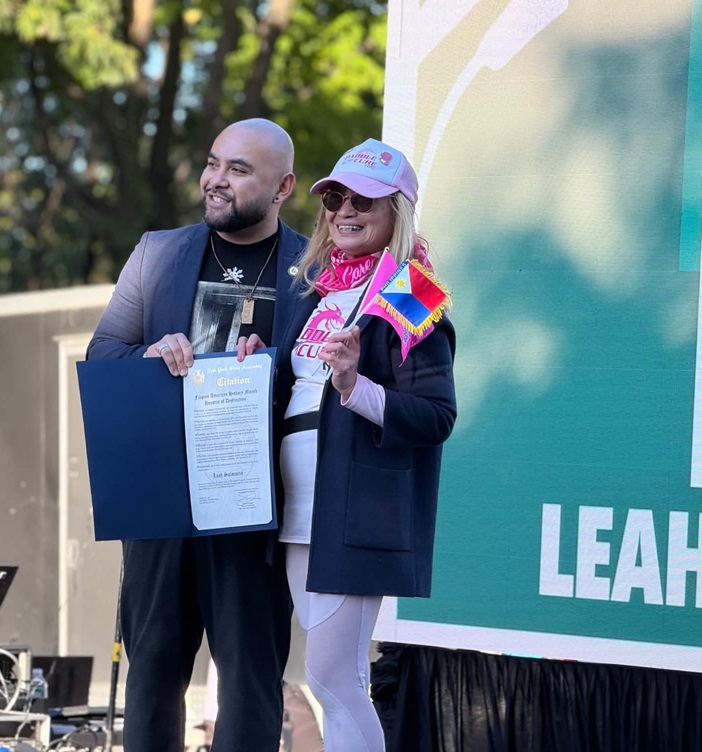
As Filipino American History Month came to a close, the first Little Manila parade in Woodside, Queens, offered an opportunity to celebrate community leaders whose work makes a difference in people’s lives.
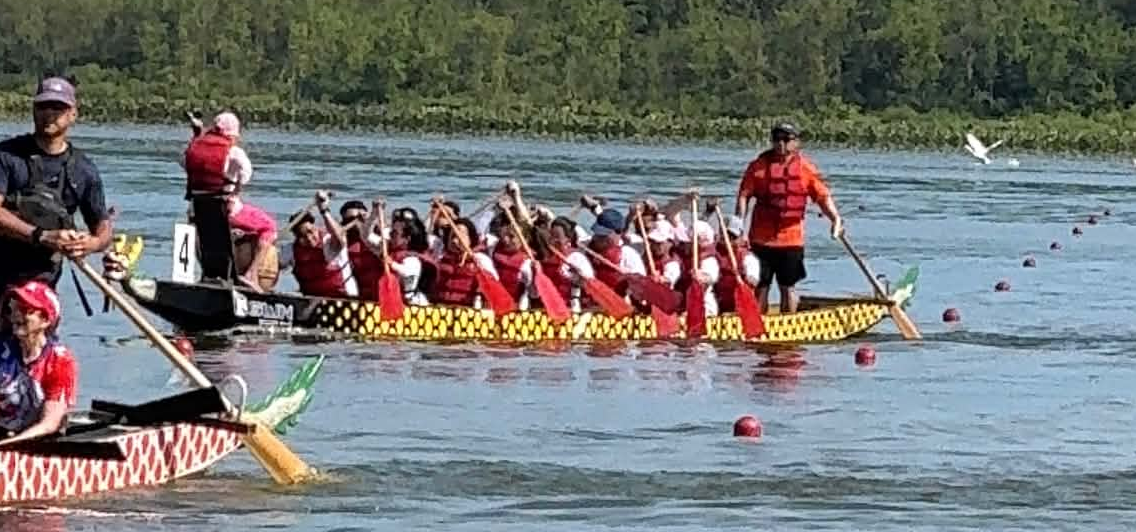
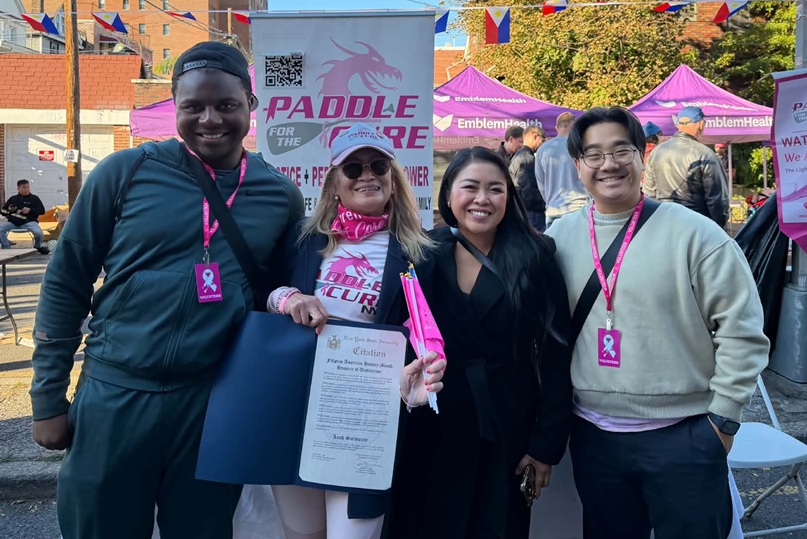
Leah Salmorin received the Distinguished Achievement Award for Advocacy from Assemblymember Steven Raga, recognizing her commitment to breast cancer survivorship and wellness through her non-profit Paddle for a Cure (PFC). The Queens-based organization brings breast cancer survivors together through dragon boat paddling.
A two-time breast cancer survivor, Salmorin has turned her personal experience with the life-threatening disease into a mission that reaches beyond her own community. Through PFC, she has created a space where survivors can find physical activity, emotional support, camaraderie, and renewed confidence.
Its members take to the water not only to participate in dragon boat races but also to demonstrate that life after cancer can be active, purposeful, and filled with possibilities.
“As a Filipino-Chinese woman and a two-time breast cancer survivor, I proudly accepted this recognition with Pink Power and Pinoy Pride,” Salmorin told The FilAm.
She described the award as a tremendous honor and a meaningful milestone bringing diverse communities together around a shared purpose.
“I wanted to connect diverse communities through one mission rather than limit my advocacy to a single group,” she said.
Finding strength in the water
Salmorin’s relationship with water began long before she founded PFC. Growing up near the water, she considered it a familiar part of her childhood. She had no idea it would eventually become central to her recovery and advocacy.
In 2004, she was diagnosed with breast cancer. Her treatment included a lumpectomy, four rounds of chemotherapy, 38 radiation treatments, and five years of hormonal therapy.
During that difficult period, she found herself drawn back to the water. There, she discovered a source of peace and strength that helped her navigate the physical and emotional challenges of cancer treatment. Paddling also helped improve her lymphedema, physical well-being, and confidence.
The experience was transformative. She wanted other survivors to discover the benefits of movement, the restorative experience of being outdoors, and the support that comes from belonging to a community.
Around 2014, she established Paddle for the Cure NYC, translating that personal discovery into a community-based advocacy initiative. Today, PFC is an independent, survivor-led, volunteer-run 501(c)(3) nonprofit organization offering complimentary paddling opportunities to breast cancer survivors who have medical clearance. Its approach is simple: Bring survivors to the water, put paddles in their hands, and let them experience the strength of moving forward together.
Medical research and treatment remain essential, but she also wants the conversation to include prevention, healthy lifestyles, holistic wellness, and environmental health.
“Cancer research fights the disease. Survivor wellness helps people live beyond the disease. We need both,” she said.
In 2024, two decades after her first diagnosis, she faced breast cancer again. The recurrence reinforced her understanding that surviving cancer does not necessarily mean returning to life as it was before the diagnosis. Survivors may continue to deal with lymphedema, fatigue, physical limitations, emotional distress, and long-term treatment side effects.
She challenges the common assumption that being declared cancer-free means the struggle is over.
“Even when there is no evidence of cancer, the effects of treatment may continue,” she explained. Her question is straightforward: “Survivorship does not end when treatment ends. So why should support end there?”
Breast cancer survivors need continuing support, not just during the months of treatment or the annual observance of Breast Cancer Awareness Month.
Her mantra of Zero Cancer is a vision for the future, not a medical claim that water or lifestyle changes alone can prevent or cure the disease. She believes in science, evidence-based treatment, and continued medical research.
“I want people to understand that I am not simply sharing my cancer story. I am building a movement and fighting for survivors who need support beyond treatment,” she said.
That distinction is important to her. She stressed PFC is not simply a recreational paddling group. It is an advocacy organization that uses a shared physical activity to promote survivorship, solidarity, and a sense of belonging.
For women who may feel isolated after completing treatment, the opportunity to join a team can offer a new sense of purpose. Paddling requires coordination, trust, and collective effort. Every member contributes to moving the boat forward. The experience also sends a powerful message: A cancer diagnosis does not define the rest of one’s life.
Her appeal to the wider community is equally direct. Breast cancer survivorship should not be a cause remembered only in October, when pink ribbons and awareness campaigns become especially visible.
“Don’t wait until October to support breast cancer survivors,” she said. “Survivorship is 365 days a year.”
Salmorin issues this gentle reminder: “Vision alone cannot sustain free survivor wellness programs. We need funding. I am calling on businesses, philanthropists, institutions, and individuals to recognize the importance of investing in survivor wellness. Imagine how many more survivors we could reach if we had the financial resources to expand our programs.”
