
Transformed memories: How the ‘arroz caldo’ became our family’s treasured comfort food
By Teresa Carandang
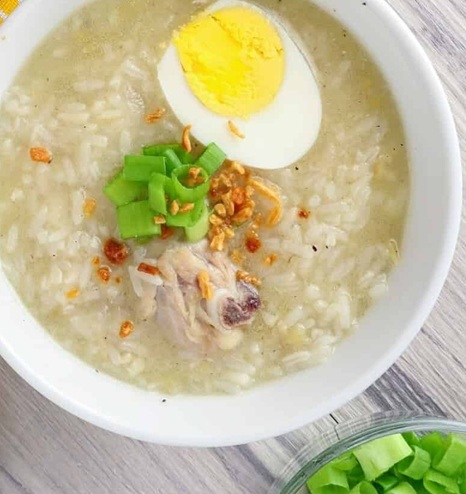
The arroz caldo of my childhood was a dish I associated with illness. As a child, I was sensitive to the sharp gingery flavor of the soup and intensely disliked biting into the ginger slices which I would always mistake for chicken. The seemingly huge chicken pieces sticking out of the soupy rice appeared unappetizing. The sight of the dreaded soup made me feel sicker. My soup of choice would be the pancit molo my Ilonggo neighbors served on New Yearʼs Eve. I had no shame, going for seconds and thirds of their pancit molo. The tender dumplings, tasty broth, and the shredded chicken in the delightful soup would certainly cure anybody who was not feeling well.
My husband held the opposite view of arroz caldo. It was his comfort food. His family had it all the time. They had it on weekly rotation, special occasions, and sick days. When we moved to Virginia, I knew I had to learn to make his favorite dish. I reintroduced myself to arroz caldo by consulting “Filipino Cooking Here and Abroad” by Eleanor Laquian and Irene Sobrevinas. I learned to cook arroz caldo with a few adaptations of my own. Ginger was cut in bigger chunks, so nobody would mistake it for chicken meat. I found no shame in using canned chicken broth. I also used adobo flakes to add to the traditional toppings of hardboiled eggs and green onions.
Patis, a condiment I typically avoid because of its high sodium content is a must in this recipe. I learned how national hero General Vicente Lim made his own patis in “Potluck, Hidalgo Bonding: A Family Heritage Cookbook” when he and his family lived in Washington, D.C. from 1926 to 1929. Lim, like many Filipinos abroad, missed patis and there was no patis to be found. He decided to make his own, getting fish drippings from the downtown fish market. The patis-making experiment was successful, but Lim decided not to repeat it as neighbors in their apartment building complained about the smell.
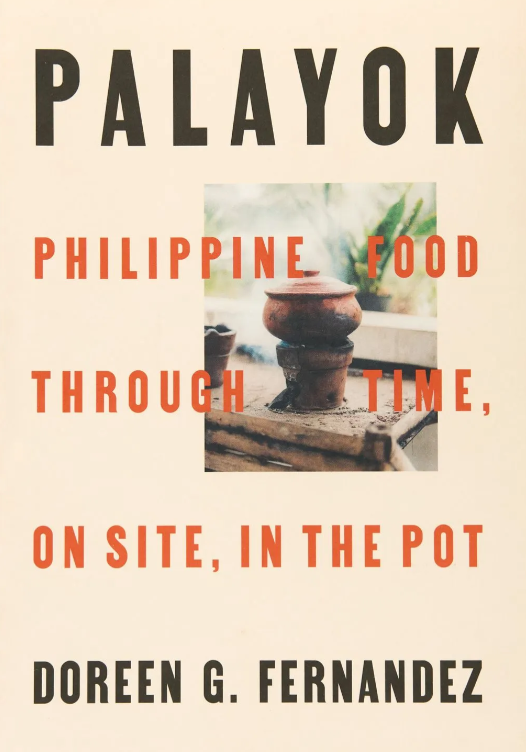
Doreen Fernandez in “Palayok,” thought arroz caldo was worth exploring because it was a Filipino/Chinese dish with a Spanish name, explaining “it ‘went publicʼ during the Spanish regime.” In the “Foods of Jose Rizal,” by Felice Prudente Sta. Maria, Doña Juliana Pardo de Tavera who lived in exile in France with her husband Felix, served arroz caldo to Jose Rizal and other Filipinos in the late 1800s.
Sulipeña cuisine – based on the long-gone town called Sulipan in Pampanga – would have disappeared if not for Gene Gonzales who faithfully documented recipes in “Cocina Sulipeña.” Their version of my husbandʼs favorite soup is called Arroza Caldo Azafronado which insists of using saffron. There is no mention of arroz caldo in one of the earliest known Filipino cookbooks, “Condimentas Indigenas” by writer and suffragist Pura Villanueva Kalaw. However, she wrote, “chickens and other birds, the blood, entrails, head, and feet give rich broth and good soup.” This advice is reinforced in the 1934 edition of “Everyday Cookery for the Home” where there is no reference to arroz caldo but there is sopa de pollo which lists chicken giblets and congealed blood, onion, kinchay, rice, water and salt as its ingredients.
In Gilda Cordero-Fernandoʼs “Philippine Food and Life,” tuba is added to arroz caldo to give it a “light, interesting, sweetish-sourish taste” as described by Dez Bautista. In the same book, Ilokano dishes are described as typically dry including the arroz caldo which is more like a “sticky rice cake” rather than a soup.
I learned of another way of making arroz caldo when one Christmas, family friends invited us to try their version. The rice and chicken were served separately. The rice was like congee and the chicken was cooked adobo style. It is a wonderful way of imparting another layer of flavor from the garlic and soy in the adobo. Later, I found stories about adobo. In 1934, after a serious operation at the Johns Hopkins Hospital, Manuel Quezon insisted he felt well and requested adobo, according to John Guntherʼs “Inside Asia.” Food journalist Clementine Paddleford wrote about American Louis Reed Spencer, who was in the Philippines during the war. Spencer said food was scarce, but chickens were more plentiful than pigs, prompting them to make chicken adobo. In 1948, Mrs. Narciso Ramos, the mother of former President Fidel Ramos, shared her chicken-pork adobo recipe in the Washington Post.

Today, arroz caldo is a weekly staple in our household. My youngest son walks in the door and smells the simmering soup. He walks up to me and says, “That smells good, Mama. Is that arroz caldo?” Memory changes. The arroz caldo I loathed has transformed to one of my sonʼs treasured memories of meals of his childhood.
This work won third prize in the 2018 Doreen Gamboa Fernandez Food Writing Award. Teresa “Titchie” Carandang is a freelance writer who lives and works in Fairfax, Virginia. Her articles have been published in Northern Virginia Magazine, Connection Newspapers and Positively Filipino. She won honorable mention in the 2016 DGF Award on vinegar. This essay is being republished with permission from the DGF Award.