Marco Rubio steps into the eye of the Philippines-China storm
The FilAm Editorial
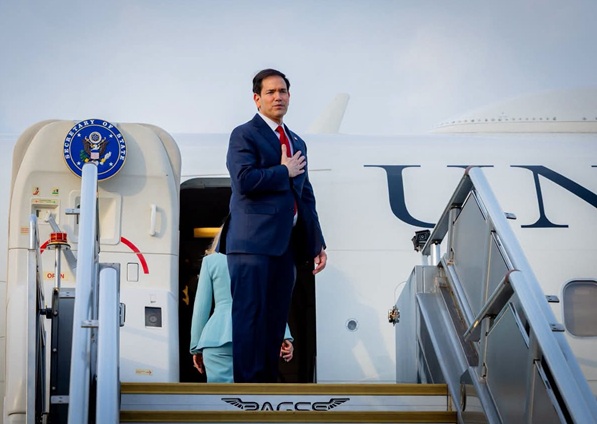
U.S. Secretary of State Marco Rubio likely did not expect his first official visit to Asia to coincide with one of the most volatile moments in the Philippines-China maritime dispute.
His trip to Manila for the ASEAN Regional Forum Foreign Ministers’ Meeting came as tensions between the two countries escalated over allegations that members of the China Coast Guard assaulted a Filipino sailor during a confrontation in the West Philippine Sea.
Rubio visited Manila from July 19 to 23 to participate in three major regional meetings: the ASEAN Post-Ministerial Conference, the East Asia Summit Foreign Ministers’ Meeting, and the ASEAN Regional Forum Foreign Ministers’ Meeting. He also held discussions with senior officials from ASEAN member states and other Indo-Pacific partners.
According to the U.S. State Department, the visit underscored Washington’s commitment to the region.
“The Secretary’s visit advances a clear U.S. priority: a free and open Indo-Pacific that delivers safety, security, and prosperity for the region and for the American people,” the department said.
The statement added that Rubio sought to demonstrate “the tangible results of the U.S.-ASEAN partnership” while deepening America’s comprehensive partnership with the Philippines.
On July 20, just one day after Rubio arrived in Manila, a confrontation reportedly occurred near the BRP Sierra Madre, the grounded Philippine Navy vessel at Second Thomas Shoal an area claimed by both Beijing and Manila
Philippine media reported that China Coast Guard personnel struck a Filipino sailor on the head with a wooden baton.
According to the Armed Forces of the Philippines, a China Coast Guard boat carrying eight personnel approached the Sierra Madre and photographed and recorded the Philippine detachment before one of its crew members allegedly assaulted the sailor. The military later released a photograph showing the injured serviceman.
The dispute soon expanded beyond the waters of the West Philippine Sea.
China’s English-language newspaper China Daily published an editorial cartoon depicting a monkey wearing the Philippine shirt called Barong Tagalog, prompting outrage in Manila. The Philippine Department of Foreign Affairs denounced the illustration as “blatantly demeaning, dehumanizing, and racist,” saying it insulted not only Filipinos but also undermined efforts to maintain respectful diplomatic dialogue.
Events quickly overshadowed Rubio’s diplomatic agenda. Both countries summoned each other’s ambassadors, a sign of displeasure over the events that happened a day earlier.
Rubio returned to Washington having reaffirmed U.S. support for the Philippines, America’s oldest treaty ally in Southeast Asia. Yet his visit will likely be remembered less for the ASEAN meetings than for the sudden escalation of one of Asia’s most sensitive territorial disputes.
Manila just became the stage on which the growing rivalry between China and the Philippines, and the United States’ role in that conflict, came sharply into focus.