
‘Manila’s Finest:’ When history speaks the truth
By Cristina DC Pastor
“Manila’s Finest” is not merely another police drama. It is a period film that recreates a turbulent chapter in Philippine history through oral research, personal memories, and lived experiences.
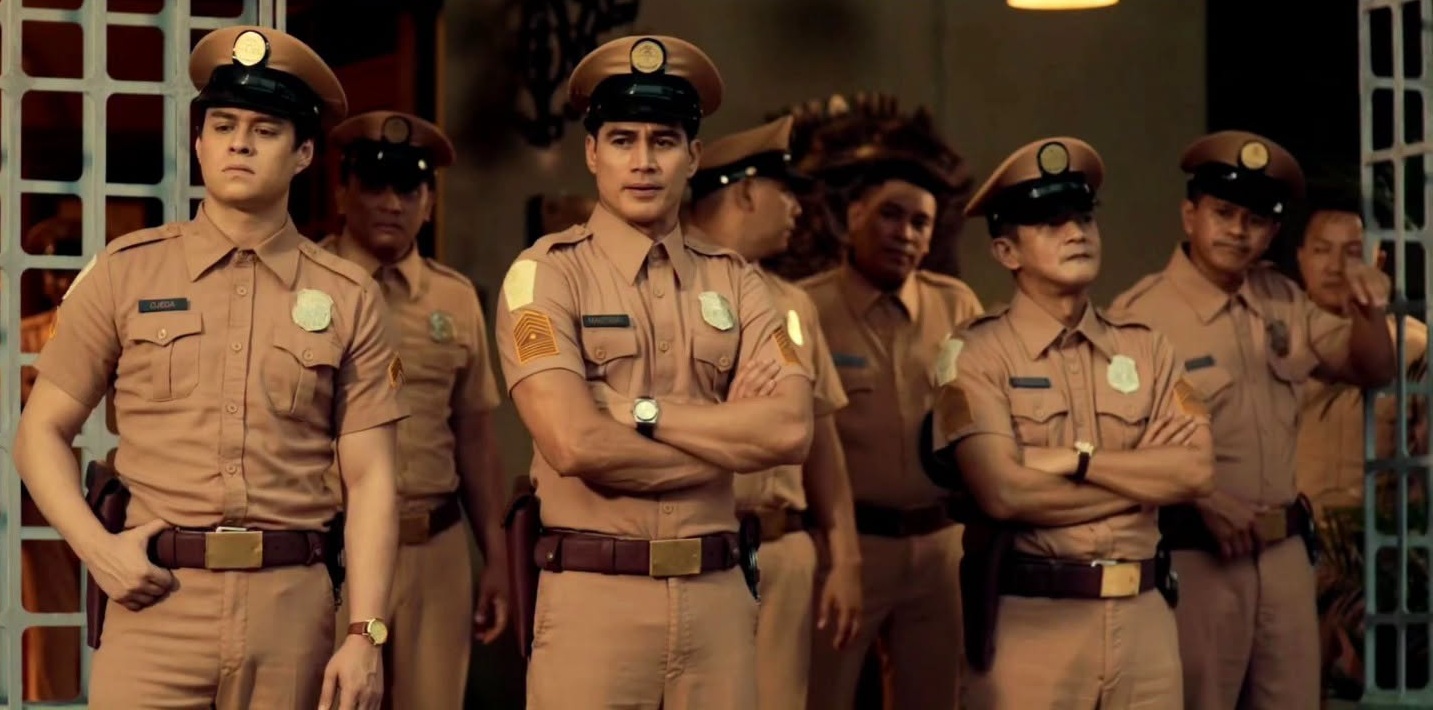
Set in 1969 Manila, just before the declaration of Martial Law in 1972, the film follows Captain Homer Magtibay, portrayed by Piolo Pascual, a principled police officer caught between his duty to the badge, the demands of his family, and a system slowly succumbing to corruption and political upheaval.
Although fictional, the story draws heavily from historical realities, said director Raymond Red (“Bayani,” “Anino”) during a pre-screening Q&A with actor Pascual on July 23 at Triad Theater.
“The seeds of this project came from the writers,” he said.
The screenplay, written by Moira Lang, Sharyn Sanchez, and Michiko Yamamoto, was inspired by the firsthand account of a retired member of Manila’s Finest police force.
“We can say the story is fictional, but it’s inspired by a lot of realities and different bits of stories that they found during their research,” Red said.
“In art, we can say it’s truthful. Not necessarily factual, but it’s truthful. It’s speaking of truths, of real things that happened.”
To faithfully reconstruct Manila in 1969, the filmmakers consulted retired police officers as well as respected cultural figures including journalist and historian Pete Lacaba and National Artist Ricky Lee. Their recollections helped the production capture not just historical details but also the atmosphere of an era when ordinary Filipinos sensed that dramatic changes were looming but were not quite sure what was to happen.
“Nobody knew that martial law was coming but you feel it,” Red reflected. “That’s what we’re presenting in the story.”
He added that while people may disagree about history, no one can deny that the period fundamentally changed the lives of Filipinos.
“Try to imagine the experience of these people living then when this invisible power was slowly taking over society and their lives, and it was about to change radically.”

For Piolo Pascual, portraying Captain Homer Magtibay required more than just memorizing lines.
“My character is very dutiful,” Pascual said. “He belongs to the squad of Manila’s Finest, and he’s the type of cop who’s actually going through a lot of conflict—not just in the system, but in the household as well.”
The actor described Magtibay as a man wrestling with personal demons while trying to maintain his integrity inside an increasingly compromised institution.
Preparing for the role proved especially challenging because Pascual was born in the 1970s and had no firsthand memory of the film’s setting in the 1960s.
“The hardest part was to act like you were in the ’60s,” he admitted.
He immersed himself in archival videos and sought guidance from the film’s historical consultants. He even turned to his mother for help.
“I watched videos from the ’60s. I spoke to my mom and asked her how they interacted during that time—the nuances, mannerisms, gestures, and how they talked to each other,” he said.
Those conversations, combined with interviews with the retired police officer who served as a character reference, helped Pascual build a believable portrait of a policeman navigating an uncertain era.
When asked by The FilAm, Red acknowledged that production moved under an extremely tight schedule, leaving little opportunity for extended field immersion.
“We had to rely on our resource persons and do our own research, whatever was available on the Internet and in books,” he said. “It was a very specific situation for those police then, which is very different from interviewing current policemen.”
For Red, the film’s relevance extends well beyond its historical setting.
“It’s a film that asks important questions about power, accountability, and the personal cost of the choices we make—not just for individuals, but for families and society as a whole.”
Those themes, he noted, resonate strongly today, he said.
“It also feels very timely with its themes of corruption, vigilance, and civic responsibility,” he added.
While “Manila’s Finest” is framed in the past, its questions remain strikingly contemporary. Its story invites audiences to remember a defining period and to reflect on its enduring lessons.
The meet-and-greet was jointly organized by Karen Krukover, founder of EdukSine USA; Hannah Suarez of the Concerned Artists of the Philippines, New York chapter CAP-NY; and TOFA founder Elton Lugay.